Nvidia is the most systemically important company in the AI chip supply chain, and on Nov. 8 its ten independent directors opened an inquiry into the conduct of the man who had run it for 33 years. Jensen Huang co-founded the company in 1993. Two days later the board retained Wachtell, Lipton, Rosen & Katz and Joon H. Kim. By mid-November Huang had resigned as president, CEO and board member, Colette Kress, the company's CFO for 13 years, had become interim CEO, and the board said it would weigh internal and external candidates for the permanent job. Huang still held about 3.58% of the stock as of March 23. BlackRock and Vanguard each held more than 7%. Nvidia reports quarterly results Tuesday under Kress. The 8-K gave no reason for the resignation and described no disagreement. In a market that mythologizes founders, the ordinary expectation was that he would be back within weeks.
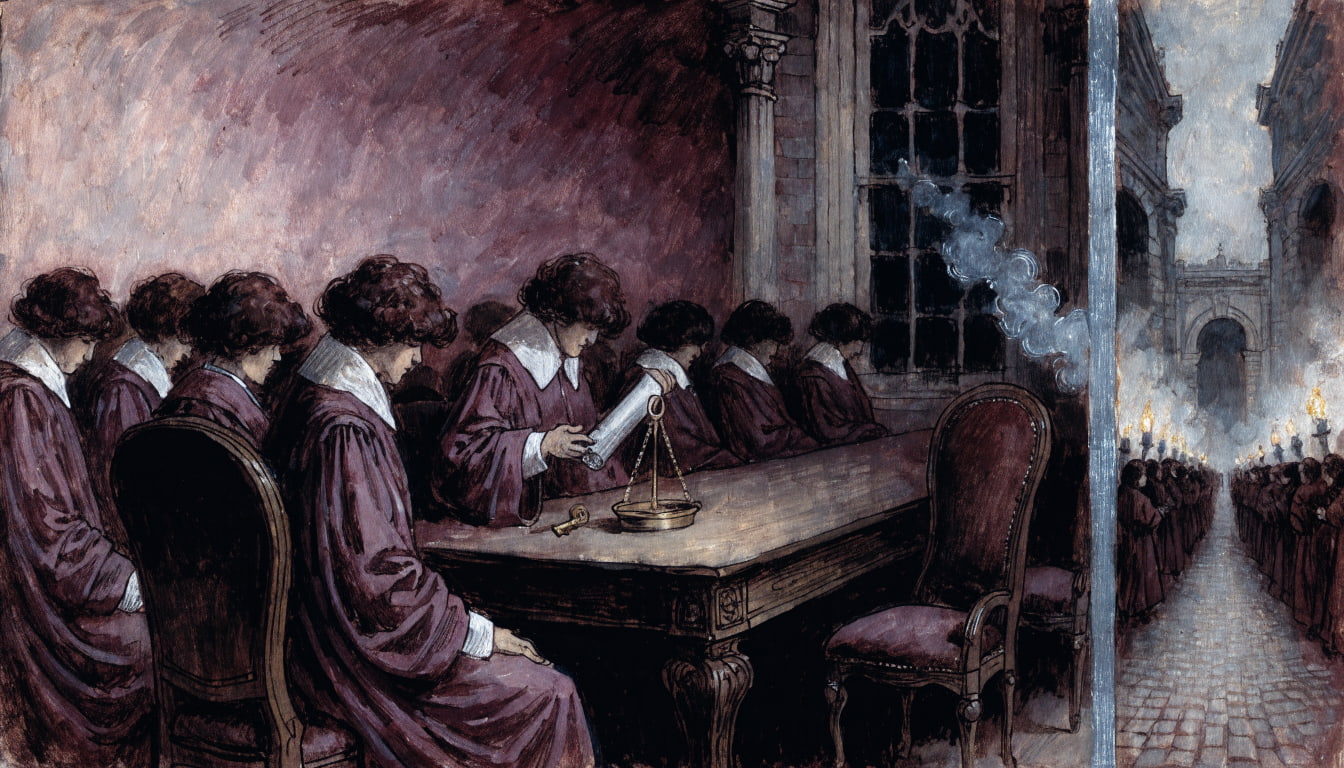
But the ten independent directors who control the CEO seat are not counting signatures. They are waiting on Wachtell.
Two stories are running in parallel. In the first, the Financial Times reported that Huang has discussed a return with close confidants, and a Huang ally said they were assembling a "war room" of Silicon Valley executives to lobby the board and seek White House support. A "Stand with Jensen" petition has drawn support from Elon Musk, Epic Games CEO Tim Sweeney and Y Combinator CEO Garry Tan, according to CNBC. In the second, a live independent inquiry is underway, congressional interviews have been requested, and a cabinet secretary is on television.

The asymmetry between those stories is the whole game. A petition can persuade directors to reconsider. It cannot make them do anything. Under Nvidia's bylaws, a majority of directors can appoint or remove the CEO with or without cause, according to Chip Dispatch. Shareholders do not vote on the CEO; they elect directors at the 2027 annual meeting. The board includes no employees and is chaired by Harvey Jones, Nvidia's first chair. The petition is loud, and it has no formal way into the decision.
Three locks stand between Huang and the CEO seat

A comeback has to clear three locks in sequence.
The first is the board's own investigation. Wachtell is documenting Huang's conduct for the directors who commissioned it. Any reinstatement has to survive findings the board itself produced, and a director who votes to bring back a CEO under that record has to explain the vote to investors and regulators who will read it.
The second is Congress. House and Senate interviews were requested for Dec. 1 and Dec. 3, and Huang is expected to testify. A CEO who returns before testifying would put the company's most sensitive export posture behind a witness under oath.
The third is Washington's verdict. Treasury Secretary Scott Bessent told Fox News that Nvidia should look "outside" the company for its next leader and "needs a dramatic shake-up." He also said anyone at Nvidia should be held accountable if its chips leaked to China. A Treasury secretary publicly opposing a return is not a formality for a company whose China business runs through a revenue-sharing arrangement.
The locks open in order or not at all. The inquiry must conclude, the testimony must happen, and the political temperature must drop. None of those steps depends on the petition.
The strongest case for a return came from shareholders. Altimeter Capital's Brad Gerstner and Atreides Management's Gavin Baker urged the board to "pursue a slow, measured, and deliberate process regarding the future leadership of Nvidia," and said that process should include "the potential return of Jensen Huang," as CNBC reported. Their funds disclosed about $2.13 billion of Nvidia stock combined as of June 30, roughly 10.7 million shares and less than 0.1% of the company. Slow and measured is a request for time, not for reinstatement.
What the 160,000 signatures actually contain
The petition's numbers are soft. Reports put the signature count at more than 160,000 in one place, 150,000 in another and 97,000 in a third. Employee signatories are reported as more than 7,500 in one account and 5,100 in another. The petition site itself notes that affiliations are self-reported and unverified. Business Insider found entries including "Tim Cruise, Hollywood actor" and "Xi Jingping," a likely misspelling of the Chinese president, as The Verge noted.
The substance underneath is more serious. Huang admitted an affair with Alice Huang, whom US officials suspect of spying for China. He was also reported to have had another affair with an Nvidia vice president. The two Huangs are not related. Beijing denies the spying claims, and Megaspeed says Alice Huang has not worked there since August 2025. One ally put the core problem plainly: "Having an affair with a subordinate is a fireable offense." That line, not the signature count, is the evidentiary floor for what follows.
Why Wachtell's findings are the exit, not the exoneration
The board does not need a villain to move on. It needs a record. Wachtell's findings are that record, and they belong to the board, so the inquiry's real function is to convert a personal scandal into a defensible governance document. With that document in hand, ten directors can name a permanent successor without appearing to cave to Elon Musk or to knife a founder.
That sequence makes the December testimony decisive. Huang testifying under oath about affairs and chip leakage while nominally running the most important AI chip company is a configuration Washington will not tolerate and the board will not underwrite. The likely path is that Huang testifies as a private founder, not as CEO. Once he does, the return window closes, because the seat will have been filled or effectively settled.
My call: within 12 to 24 months, Huang does not return as permanent CEO. The board uses the Wachtell findings to name a successor, most likely Kress or an outside operator. Huang's public role narrows to founder-chairman or an advisory post with no operational authority. The war room's real achievement is a negotiated exit that protects his equity and reputation and keeps Nvidia's China export arrangement intact.
Bessent's "dramatic shake-up" framing wins the political argument because the alternative is a CEO who must testify while running the company that holds the H200 arrangement, under which Washington takes 25% of the revenue from China sales. Washington will not hand that revenue relationship to a witness. The prediction would be wrong if Wachtell cleared Huang on both the affair and China questions and the Treasury withdrew its opposition. Absent that, the sequence points one way.
What Huang, Kress and the ten directors actually get
Huang keeps his equity and a title, and he gives up the operating job. Kress stops being a placeholder. She is now the most likely permanent answer, and Tuesday's earnings call is her audition. The ten directors get to show independence at the moment Washington is deciding whether to trust Nvidia with China revenue. Washington gets a witness without a corner office. BlackRock and Vanguard get continuity without a scandal premium. The petition signers and Silicon Valley allies treated a governance fight as a popularity contest, and their consolation prize is a founder-chairman title. Anne Wojcicki put the cultural undertow bluntly to Bloomberg: "Power corrupts, and people start to think they are invincible."
The signal was never the signatures
The board opened its inquiry on Nov. 8 and retained Wachtell two days later. The seat has been empty since. The signal to watch in December is whether the board lets Huang testify before anyone talks about bringing him back. That answer decides whether he comes back.