Four Iranian tankers carrying 4.8 million barrels of oil just broke the US naval blockade, and crude prices are crashing anyway.

The Diona and Hero 2, carrying 3.8 million barrels between them, crossed the blockade line on Tuesday. The Sonia I followed on Wednesday with another 1 million barrels, according to TankerTrackers data cited by Al Jazeera. The ships were supposed to signal a return to normal. Instead, they are the first wave of a flood that will drown the old order.
Donald Trump celebrated on Truth Social with characteristic bombast: "Ships of the World, start your engines. Let the oil flow!" The market responded by torching crude prices. European natural gas fell 5.8%. Orange juice futures headed for their lowest close of the year.

The consensus reads this as a supply shock unwinding. The consensus is wrong.
The dam, not the valve
On June 14, 2026, the US and Iran announced a memorandum of understanding that includes "an immediate and permanent end to military operations on all fronts, including Lebanon," France 24 reported. The deal, mediated by Pakistan and Qatar, extends a 60-day ceasefire during which negotiators will hammer out final terms including nuclear issues. A formal signing is scheduled for June 19 in Switzerland.
Trump authorized "the toll free opening of the Strait of Hormuz" and ordered the immediate removal of the naval blockade, according to Al Jazeera. He added a characteristic warning: the US could restart military operations or become "the guardian of the Middle East" in exchange for 20 percent of the region's revenues.
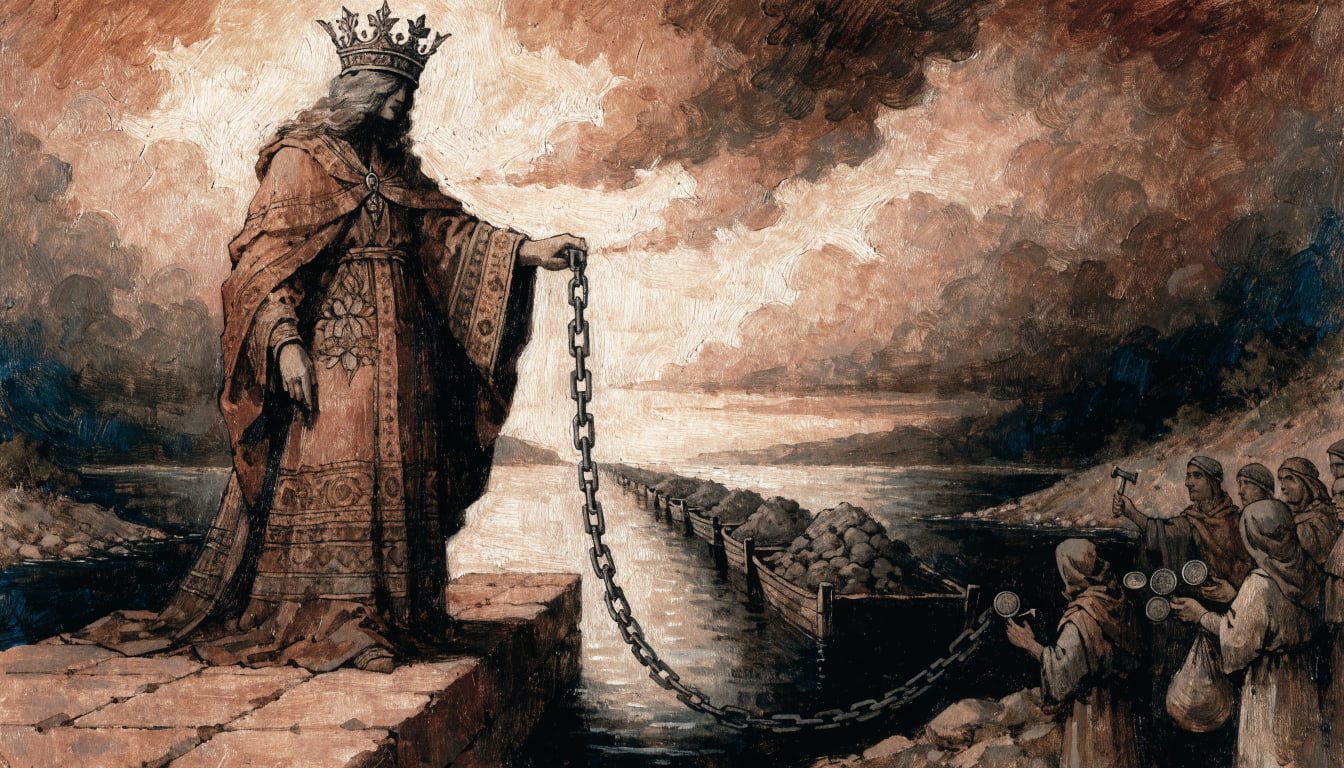
Behind the ceremony sits a physical reality: roughly 118 laden tankers carrying 75 million barrels remain trapped inside the Gulf, per shipping data compiled by Izabella Kaminska. That oil is about to hit the market all at once. The strait handled 20% of global oil and LNG traffic before the war. The reopening is not a valve turning back to normal. It is a dam breaking.
107 days that rewired energy flows
The war began on February 28, 2026, with joint US-Israeli strikes on Iran. Over 107 days, the Strait of Hormuz became a chokepoint that stranded 75 million barrels and rerouted global energy flows. Israeli Defence Minister Israel Katz announced Israeli forces would remain in security zones in Lebanon, Syria, and Gaza indefinitely, The Straits Times reported. The blockade was total. The disruption was priced into every barrel of crude on the planet.
Now the blockade lifts, and the market is doing something that should terrify energy traders: it is falling, not stabilizing. The obvious explanation is that 75 million barrels of trapped supply are about to flood the market. That is true. It is also the smaller story.
The demand crisis the war was hiding
Analysts are divided on whether the price drop is a supply-side release or a deeper demand problem, Kaminska notes. The evidence tilts hard toward demand. European natural gas is not just falling on the supply news. It is falling because European industrial demand never recovered from the energy shock of 2022, and the war merely papered over that structural weakness with a supply panic. Orange juice futures are not a Strait of Hormuz story at all. They are a consumer demand story.
The market is not absorbing a temporary glut. It is signaling that the world does not need as much oil as it used to, and the war was the only thing keeping prices elevated. Remove the supply disruption, and you are left with the underlying trend: a secular decline in fossil fuel demand that predates the war and will outlast the peace.
The next oil shock is not supply. It is demand.
The 75 million barrels coming out of the Gulf will find a market that has already started moving on. Shipping routes rerouted during the blockade will not all snap back. Refineries that switched to non-Gulf crude will not switch back overnight. And the price signal itself will accelerate the shift.
The capital rotation nobody is talking about
Here is what happens next, and it is not a return to the pre-war order.
The flood of trapped oil will suppress crude prices below pre-war levels for 12 to 24 months. This is not a prediction about a dip and recovery. It is a prediction about a ceiling. Every time crude tries to rally, another wave of tankers will leave the Gulf, and the market will absorb the message again: there is too much oil chasing too little demand.
That price collapse will then accelerate the structural decline in oil production. Marginal wells get shut in. Exploration budgets get cut. Governments that depend on oil revenue lose the fiscal capacity to sustain production. The price collapse becomes self-reinforcing. This is the mechanism that turns a cyclical glut into a secular decline.
Now follow the money. Oil-dependent economies facing revenue collapse cannot sustain their currency pegs or their sovereign debt loads. Their central banks will be forced to liquidate dollar-denominated reserves to defend budgets built on 80-dollar oil that are now staring at 50-dollar oil. Where does that capital go? It does not go into other petrostate assets, because the contagion is sector-wide. It goes into the only hard asset that carries no counterparty risk and no correlation to Gulf stability: gold.
Central banks were already moving in this direction before the peace deal. 45% of central banks plan gold purchases over the next twelve months, Kaminska reported. The peace deal supercharges that trend. The early movers are the signal. The rest will follow as the revenue collapse in petrostates becomes visible. This is not a gold bug's fantasy. It is a rational portfolio response to the unraveling of the oil-dollar system that has anchored global reserves for five decades.
Meanwhile, the Strait of Hormuz itself will never return to its 20% global share of oil and LNG traffic. The war permanently rerouted supply chains. Alternative energy investments accelerated during the blockade. Non-Gulf producers gained market share they will not surrender. The strait is open, but the world has already built a system that needs it less.
Within 12 to 24 months, crude oil will remain suppressed below pre-war levels while gold surges. The peace deal does not stabilize oil markets. It exposes their fragility and accelerates the rotation of capital away from crude and toward hard assets.
This is a falsifiable call. If crude returns to pre-war levels within 12 months and holds there, the thesis is wrong. If gold does not rise significantly as central banks report reserve allocations over the next two years, the thesis is wrong. But the signals are already flashing.
What to do with this
Energy traders should short crude and go long on gold. The supply glut is real, but the demand crisis is the trade. Every rally in crude over the next 12 months is a selling opportunity, not a recovery signal.
Central bank strategists should increase gold reserves and reduce exposure to Gulf-based oil assets. The 45% of central banks already planning gold purchases are early movers. The rest will follow as the revenue collapse in petrostates becomes visible.
Policymakers in oil-dependent economies should prepare for a prolonged period of low prices. The peace deal will not restore the fiscal position of any petrostate. It will accelerate its deterioration. Budgets built on 80-dollar oil will not survive 50-dollar oil, and 50-dollar oil is where this is heading.
The ships that signaled nothing
The four tankers that broke the blockade were supposed to be the first sign of normalcy. The Diona, Hero 2, and Sonia I were carrying crude to a market that had been starved of supply for 107 days. The expectation was that prices would stabilize as supply resumed.
Instead, they crashed. The ships are not a return signal. They are the first wave of a flood that will reveal how much the world has already moved on. The Strait of Hormuz is open. The world does not need it like it used to. The tankers are not sailing toward a recovery. They are sailing into a market that has already priced in their irrelevance.