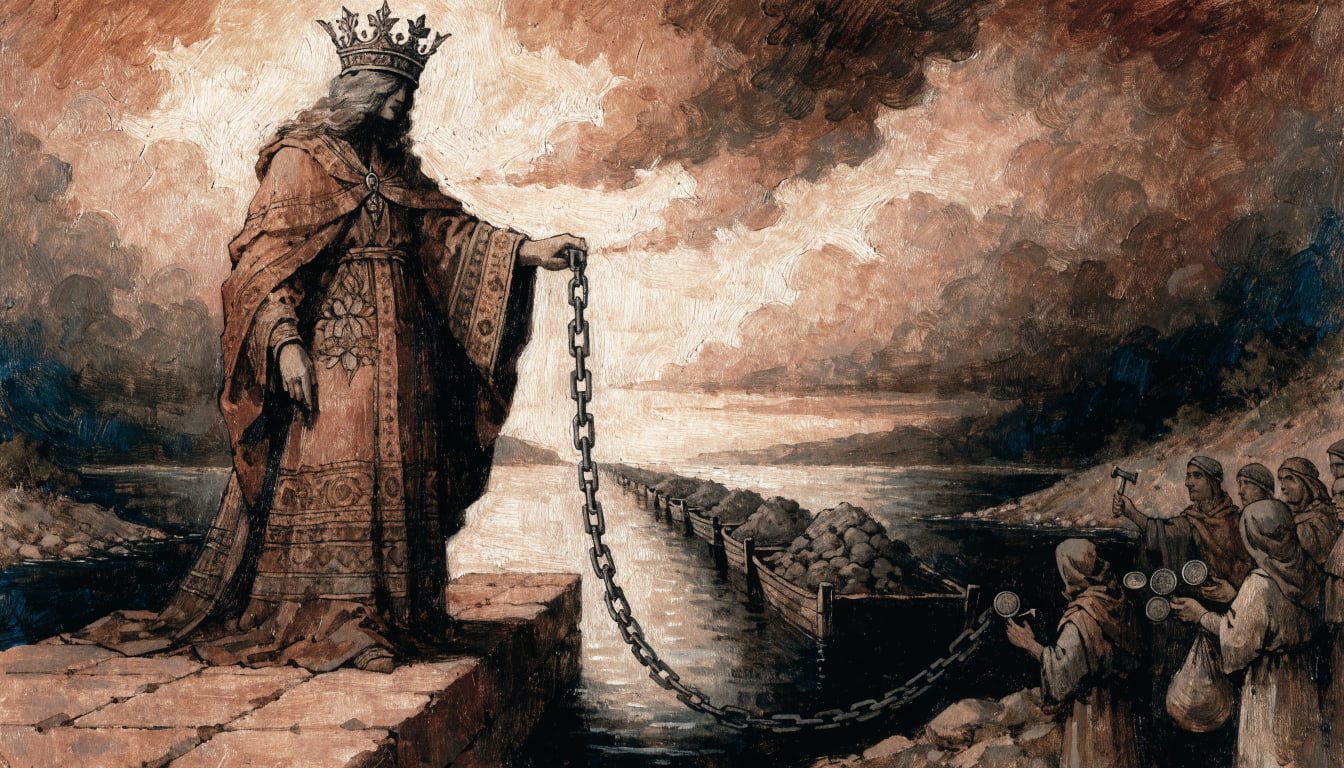
Half of the world’s sulfur supply is now stranded behind a military chokepoint.

Tanker traffic through the Strait of Hormuz has collapsed by more than 95 percent, according to the Council on Foreign Relations. This is not a temporary disruption. The strait carries up to 30 percent of internationally traded fertilizers, and the Gulf region accounts for nearly half of global sulfur trade—the critical input for processing phosphate rock into fertilizer, per the UN Food and Agriculture Organization.
The physical blockade is the headline. The permanent structural break is the story. Within 12 to 24 months, the global fertilizer market will fragment into rival spheres of influence. A frantic, subsidized sprint to mine lower-grade phosphate rock in geopolitically safe regions is already beginning. Russia will use its non-Strait-dependent fertilizer and grain exports to lock in client states, trading food security for political fealty. The import-dependent breadbaskets of East Africa and South Asia face a liquidity crisis that makes the Arab Spring look like a tremor.

The 1970s Oil Shock Is a Distraction
The consensus frames this as an energy price spike that will ease when the Strait reopens. That is dangerously wrong. Modern agriculture is an industrial process dependent on a single chokepoint for three inputs: sulfur for phosphate fertilizer, natural gas for nitrogen fertilizer, and energy for operations and transport. The 1970s embargoes disrupted fuel. This crisis disrupts the chemistry of food production itself.
The FAO Chief Economist confirmed the Gulf region accounts for nearly half of global sulfur trade. Fertilizer prices spiked sharply in early March 2026: Middle East granular urea up 19 percent in a single week, Egyptian urea surging 28 percent. The FAO Food Price Index rose for a third consecutive month in April 2026, driven by high energy costs and Middle East conflict. Cereal producers could face income losses of up to 5 percent in 2026, with lasting impacts through 2030. The oil price is a symptom. The weaponization of the food supply chain is the disease.
The Insurance Market Already Broke the Old Supply Chain
The structural damage was done through the insurance market. War-risk premiums rose from 0.25 percent to as high as 10 percent of vessel value, with coverage now resetting every seven days, according to FAO data. That 10 percent surcharge is not a temporary friction. It is a new permanent risk-pricing floor for a generation of shipowners. Even if the Strait opened tomorrow, the just-in-time procurement model for food inputs is dead. No sovereign food buyer will ever again allow itself to be this exposed.
The cascading failure is straightforward. Step one: insurance at 10 percent of vessel value makes shipping uneconomical. Step two: sulfur and urea shipments halt, causing immediate price surges. Step three: phosphate and nitrogen fertilizer production slows globally, not just regionally. Step four: farmers in import-dependent regions cannot afford inputs, reducing planting and yields. Step five: the FAO Food Price Index rises for a third month, with cereal producer income losses projected through 2030. This is a slow-motion famine driven by finance, not a lack of ships.
The Permanent Fragmentation Has Begun
A “Sulfur OPEC” will not form. The crisis destroys trust in the Strait as a viable trade route. The response is a subsidized sprint to mine lower-grade phosphate rock in geopolitically safe regions. North America and Australia will be the beneficiaries of a crash program to secure domestic fertilizer production capacity. Green ammonia projects will receive emergency funding to bypass natural gas dependencies tied to contested chokepoints.
The unexpected winner is Russia. Its fertilizer and grain exports do not transit the Strait of Hormuz. Moscow will use this structural advantage to lock in long-term client-state relationships across import-dependent regions. Food security will be traded for political fealty. The losers are East Africa and South Asia, where a liquidity crisis for food imports will hit with force. The FAO warns the window for preventive action is closing quickly, with decisions taken now determining whether a severe global food price crisis emerges within 6 to 12 months.
This fragmentation aligns with broader systemic shifts. Gold overtook US Treasuries as the top reserve asset for central banks at the end of 2025, accounting for 27 percent of reserves versus 22 percent for Treasuries, according to the European Business Magazine. Brent crude hovered at $91 to $92 per barrel as of May 31, 2026, after spiking past $100 earlier in the month, Modern Diplomacy reported. Exxon Senior Vice President Neil Chapman warned commercial inventories are approaching “unheard of” low levels and oil could hit $150 to $160 within weeks. The financial architecture underpinning the old trade routes is shifting in real time.
What This Means Now
For policymakers, the FAO’s 6- to 12-month window for preventive action is closing. For investors, fertilizer assets are being permanently repriced, and “food security” now carries a geopolitical premium that will not fade. For the public, persistent food inflation and supply shortages are coming, driven not by a lack of food but by a lack of affordable inputs to grow it. The Federal Reserve faces a hawkish hold with a live hike tail, as reported by Global Macro Method, signaling that this supply-side shock will be met with demand destruction, not relief.
The Strait of Hormuz has become the world’s agricultural Achilles’ heel. The arrow has already been fired. Half the world’s sulfur is stranded. The rewiring of global trade routes and alliances is not a future possibility. It is the current reality, and its consequences will define the next decade of global stability.