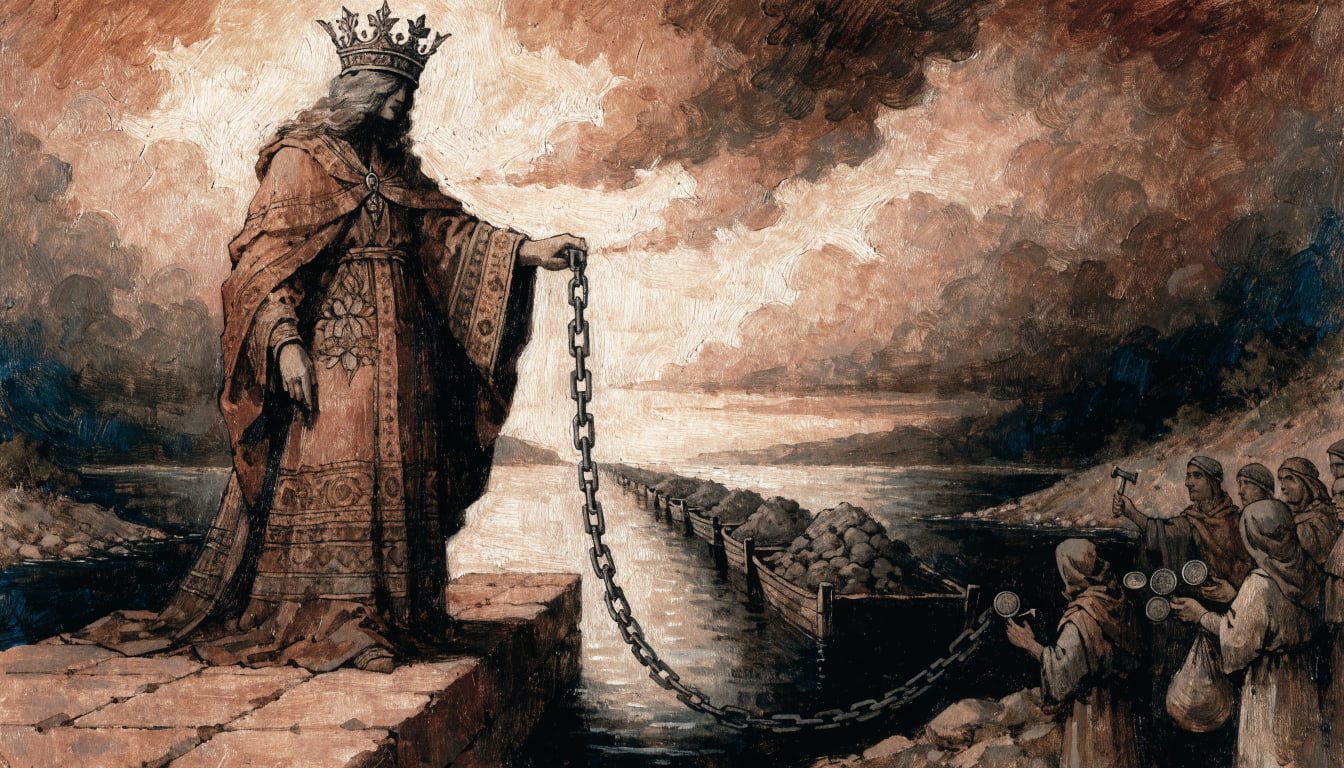

On July 20, 2026, Yemen's Iran-aligned Houthis announced a maritime blockade on Saudi Arabia, shutting the Bab al-Mandeb strait to vessels carrying Saudi crude. Houthi military spokesman Yahya Saree framed the move as "an eye for an eye, blockade for blockade" against "the criminal Saudi enemy." The language was theatrical. The consequence is not.
The Strait of Hormuz has been shut since February 28, when Iran closed it following a U.S.-Israeli attack. Saudi Arabia's workaround was to pump crude west across the kingdom to the Red Sea port of Yanbu, bypassing the Gulf entirely. That workaround is now gone. For the first time, both of the Middle East's critical oil chokepoints are closed simultaneously. There is no third option.

How a Backup Plan Became a Trap
After the Hormuz closure, Saudi Arabia diverted more than 70% of its normal daily crude exports to Yanbu. In recent weeks, shipments from that port averaged 4 million barrels per day, according to data from Kpler and Signal Ocean. The Red Sea became the kingdom's single pressure-release valve.
The Houthi blockade threatens to cut off 5 million barrels per day through Bab al-Mandeb, the 32-kilometer-wide strait whose name translates from Arabic as "the Gate of Tears." Normally, about 12% of world trade and a quarter of global container traffic passes through it. A closure forces vessels around the Cape of Good Hope, adding two to three weeks to journeys between Asia and Europe.
Geography is now a trap. With Hormuz blocked to the east and Bab al-Mandeb blocked to the south, Saudi Arabia's export flexibility is zero. Crude can reach Yanbu. It cannot leave the Red Sea. Tankers already stretched thin by months of Hormuz rerouting now face a compounding queue effect that no navy can solve quickly.
The Retaliation Spiral
The proximate trigger arrived on July 14. Yemen's internationally recognized government bombed the runway at Sanaa International Airport to prevent an Iranian aircraft from landing. The Yemeni government claimed the flight was carrying military experts, drone technology, and communication equipment. Houthi officials insisted the aircraft was transporting more than 200 stranded medical patients and a delegation returning from the funeral of the late Supreme Leader Ayatollah Ali Khamenei. Both narratives are contested. What followed is not.
The Houthis fired ballistic missiles toward southern Saudi Arabia within hours. Then, on July 20, came the blockade. Nasruddin Amer, deputy head of the Houthi media office, stated on X that the strait would be closed in response to Saudi Arabia's "unjust blockade on Yemenis for over 10 years."
This escalation did not happen in a vacuum. A memorandum of understanding signed in Islamabad on June 17 had briefly reopened Hormuz and pulled oil prices back to pre-war levels. Both sides have since accused each other of violating that agreement. President Trump views the truce as over. Iran says it no longer intends to adhere. Seventeen U.S. service members have been killed since the war began.
Two Straits, One Problem
Two closures interact in ways that compound faster than most models account for.
Hormuz blocks Gulf exports. During peacetime, 20% of the world's oil and gas passed through it. Bab al-Mandeb blocks the Red Sea alternative. The combined effect is multiplicative. Ships already diverted from Hormuz are now trapped or forced to take the Cape route, which adds weeks to each voyage and removes effective capacity from the market even if the vessels are technically sailing.
The shipping cost spike is immediate and self-reinforcing. Insurance premiums for Red Sea transits become punitive. Tanker owners refuse the route. Available hulls thin out. Spot rates surge. The physical oil is still underground. The mechanism to move it to refineries is breaking down.
Geopolitical Futures reported that people who follow the oil trade closely believe "we are entering the point at which the oil buffer of global reserves is reaching its limits." That buffer is the last line of defense between a supply disruption and physical shortages at refineries. It is being drawn down with no clear plan for replenishment.
The Math of $150 Oil
The consensus view is that the Houthi blockade is a symbolic escalation, one that U.S. naval patrols can counter. That view misses the mechanism.
A dual-strait closure does not reduce supply by a fixed percentage. It breaks the logistics chain that connects supply to demand. Spare production capacity exists, largely in U.S. shale and West Africa. But spare capacity is not the same as deliverable barrels. The oil is there. The tankers and the safe routes are not.
Here is what that means in practice. A refinery in Rotterdam or Singapore does not buy "global supply." It buys a specific cargo on a specific vessel arriving on a specific date. When the Red Sea route closes, that cargo must go around the Cape. The voyage lengthens by two to three weeks. The tanker that was supposed to deliver in August now delivers in September. The refinery draws down its local inventory to bridge the gap. Multiply that across every refinery dependent on Middle East crude and you get a synchronized inventory drain that no strategic reserve release can offset quickly enough.
This is the mechanism that drives prices past $150 per barrel within 12 to 24 months. It is not a demand shock. It is not a supply shock in the abstract. It is a logistics shock that creates physical scarcity at specific locations at specific times. Markets price the last available barrel, not the average barrel. When a refiner faces a shutdown because a cargo is three weeks late, the price it will pay for any barrel that can arrive sooner has no theoretical ceiling.
Strategic reserves are the safety net. But the buffer is already near its limits. A coordinated IEA release can bridge a short disruption. It cannot bridge a permanent rerouting of the global tanker fleet. Reserves are drawn down once and then they are gone. The window for replenishment closes when both straits remain shut and alternative supply cannot scale fast enough. Within 18 to 24 months, the safety net is exhausted. The market then prices physical scarcity without a backstop.
Iran's Overplay
Tehran's strategy from the start has been to close Hormuz, create an economic crisis, and trigger a political crisis in the United States. The Bab al-Mandeb closure amplifies that crisis beyond what Iran likely anticipated. But the mechanism cuts both ways.
A global economy facing $150 oil and exhausted strategic reserves will not absorb the shock passively. The U.S. and its allies will form a naval coalition to forcibly reopen both straits by mid-2027. This is not a prediction about political will. It is a prediction about the structural incentives of states that cannot allow their economies to collapse. The risk of direct military engagement between the U.S. Navy and Iranian and Houthi forces is high. The operation to clear Bab al-Mandeb alone would be a weeks-long campaign against anti-ship batteries on both shores, not a show of force.
Iran gains leverage in the short term. It triggers its own containment in the medium term. The era of free-flowing Middle East oil ends not with a negotiated settlement but with a military operation and a market that has moved on.
The Permanent Shift
European and Asian importers, already diversifying away from Middle East crude since the Hormuz closure, will lock in that shift permanently. U.S. shale, West African crude, and renewable alternatives become premium assets. Saudi Arabia loses its role as swing producer, the position that gave it strategic weight for half a century.
This is the second-order effect that outlasts any military resolution. Importers do not return to a supplier that has proven unreliable, regardless of the reason. The infrastructure investments required to receive U.S. shale or West African crude are sunk costs that create path dependency. Once a refinery in India or China reconfigures for lighter crude grades, it does not switch back when the straits reopen. The diversification premium that was theoretical for a decade is being priced in real time.
What Operators Need to Know Now
Traders: Extreme volatility is the baseline. Physical market dislocations will create spreads that look like data errors. Backwardation becomes the default curve shape as prompt barrels command any price. The trade is not direction. It is structure.
Policymakers: Plan for Strategic Petroleum Reserve exhaustion as a base case within 18 months. Emergency demand rationing frameworks must move from contingency planning to operational readiness. The political cost of rationing is lower than the political cost of empty reserves.
Shipping: The Cape route becomes the new normal for Asia-Europe traffic. Ton-mile demand surges, but available capacity does not. Spot rates follow. Insurance costs for any vessel within range of Yemen or the Strait of Hormuz will price out all but military convoys.
Investors: Renewable energy supply chains and non-Middle East hydrocarbon assets reprice upward. Assets in the Permian Basin, offshore West Africa, and the North Sea gain strategic value that balance sheets have not yet reflected. The trade is not a cyclical oil bet. It is a structural shift in the geography of energy supply.
The Gate of Tears
Bab al-Mandeb means "Gate of Tears." The name was never metaphorical. It described the danger of the crossing, the narrows where ships risked grounding, the chokepoint that traders and navies have navigated with caution for centuries.
The dual-strait closure is not a temporary disruption. It is the end of an era in which the world could assume that Middle East oil would flow, that chokepoints would be managed, that the system would hold. The last escape valve was never an escape at all. It was a bottleneck waiting to be squeezed. The world just learned that the hard way.