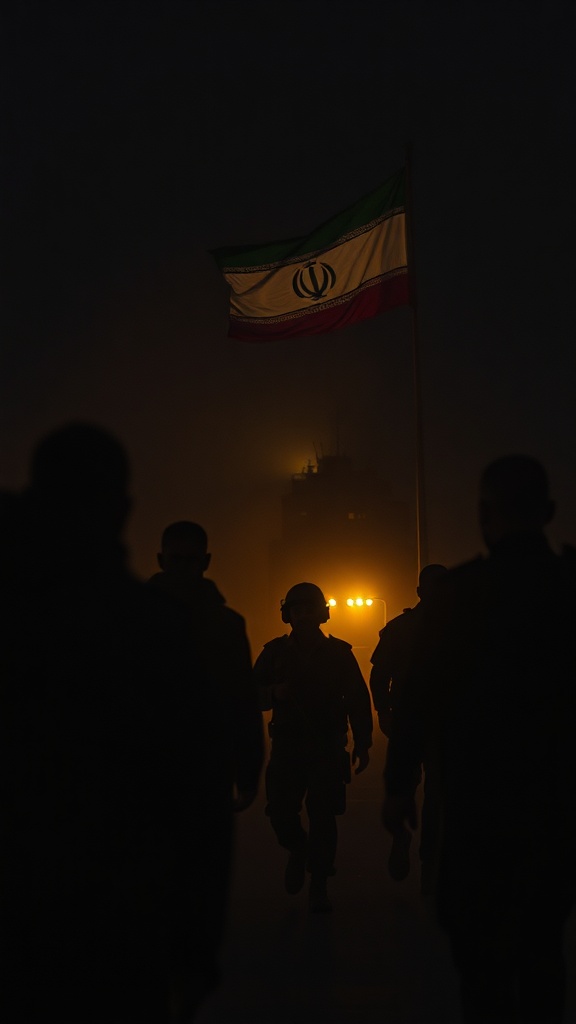
A 40-day war just handed Iran control of the Strait of Hormuz for the first time since 1622.

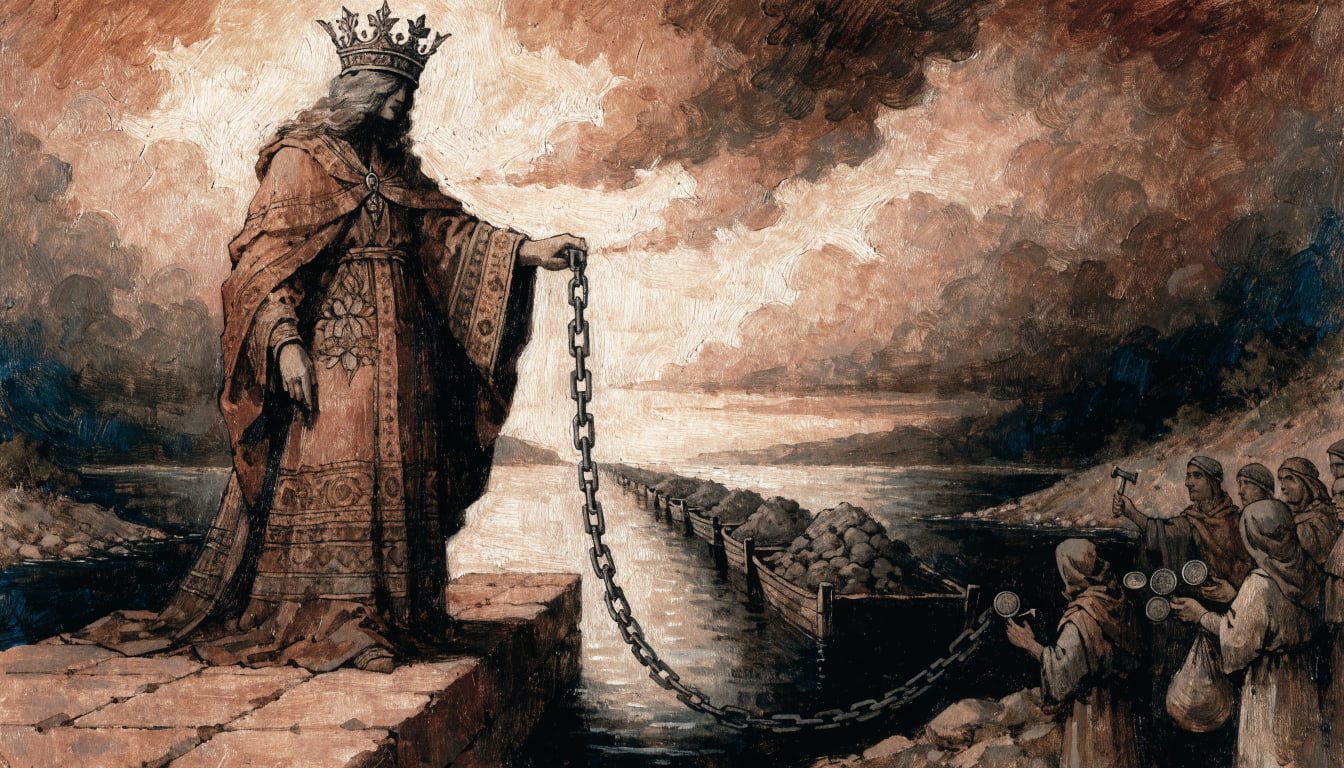
This is not a ceasefire provision. It is not a temporary security arrangement that expires when diplomats return to Geneva. Iran has asserted full sovereign management over the waterway through which a fifth of the world’s oil supply passes daily, and it is using the legal architecture of international law to make that assertion permanent. The historical parallel is precise: in 1622, Shah Abbas I expelled the Portuguese colonial fleet from the same strait, ending 117 years of foreign domination. Iran marks that victory every April 30 as National Persian Gulf Day. The 2026 war has produced the same outcome—sovereign control restored—but compressed into 40 days of combat and a 60-day US sanctions waiver that expires on August 21, 2026.
The War That Changed the Balance

The US-Israeli military campaign against Iran began on February 28, 2026. Within days, Iran closed the Strait of Hormuz to vessels affiliated with its adversaries, sending economic shock waves across the globe. The closure was total for targeted shipping and strategically ambiguous for everyone else. Oil prices spiked. Insurance markets seized. The US Navy’s Fifth Fleet, built around ensuring freedom of navigation, found itself unable to reopen the chokepoint without escalating to a direct ground war that Washington had not prepared for.
After approximately 40 days of fighting and a shaky ceasefire, the United States signed the Islamabad Memorandum of Understanding on June 17, 2026. The next day, the Treasury Department’s Office of Foreign Assets Control issued General License X, a 60-day authorization permitting the production, shipment, delivery, and sale of Iranian crude oil, petroleum products, and petrochemicals. On June 22, the United States formally suspended sanctions on Iranian oil. President Trump declared the Strait “totally open” to shipping.
What he did not say is that it is open on Iran’s terms. The license is temporary. The control is not.
The Harder, Younger Leadership That Now Runs Tehran
Iran’s post-war leadership is not the clerical gerontocracy that Washington spent two decades trying to sanction into submission. The war gutted the old political order. In its place stands a military command under Mojtaba Khamenei and the Islamic Revolutionary Guard Corps that has, as the Asia Times reported, “shed the theological defensiveness of the founding generation and adopted the cold strategic calculus of a state that knows it survived, and knows what it survived.”
That calculus now extends beyond territorial defense. Iran’s strategy combines defense of the homeland with external forward defense. The first layer of deterrence starts on the mainland. The second layer leverages allied forces across the region. The Strait of Hormuz is the choke point where these two layers meet. Controlling it is not an act of aggression in Tehran’s doctrine. It is the baseline condition of sovereignty.
And they have the legal argument to back it.
The Legal Leverage: ‘Fundamental Change of Circumstances’
On the surface, the Strait of Hormuz is governed by the customary law of transit passage. Coastal states may regulate but not suspend innocent passage through straits used for international navigation. Iran had long observed a practice of unilateral comity—allowing passage as a gesture, not a binding obligation.
That practice is now revoked.
Kazem Gharibabadi, Iran’s Deputy Foreign Minister for Legal and International Affairs, laid out the legal foundation in June 2026. Iran’s prior accommodation, he stated, “was never to be understood as an acceptance of a binding legal obligation or as a relinquishment of the coastal State’s sovereignty and sovereign rights over its own waterway.” The repeated acts of aggression by the United States, Israel, and certain neighboring states now constitute a fundamental change of circumstances. Under the Vienna Convention on the Law of Treaties and customary international law, that doctrine permits a state to withdraw from commitments whose original basis has been destroyed.
Iran is not asking for renegotiation. It is declaring that the old arrangement no longer exists. The 1622 precedent is the anchor: Iran’s pre-colonial sovereignty was never extinguished, only temporarily displaced by foreign powers. What is being restored is the original, unbroken claim.
The Payoff: Permanent Rules and a Binary Choice
Within 12 to 24 months, Iran will codify its new management rules for the Strait of Hormuz. The mechanism is already clear: permanent tolls or security clearances on all non-allied vessels, administered by the IRGC Navy. The legal vehicle will be a combination of domestic legislation, bilateral agreements with allied states, and a formal notification to the International Maritime Organization asserting a new transit regime grounded in the fundamental change doctrine.
This is not speculation about Iranian intent. It is the logical endpoint of the legal position Gharibabadi has already articulated and the military reality Iran has already enforced. The only question is whether the United States accepts it or fights it.
The US now faces a binary choice, and the clock is running. General License X expires on August 21, 2026. When it does, the sanctions architecture snaps back into place unless Washington extends the waiver or negotiates a permanent deal. Extension without a deal is politically impossible. Negotiating a deal means accepting Iran’s new Hormuz regime as a condition of any normalization. Refusing to negotiate means the Strait closes again to adversarial shipping, and the global oil market absorbs a second shock within 18 months of the first.
The winners are Iran and the IRGC. The war that was meant to break Iranian power instead broke the constraints on it. The IRGC now controls the world’s most critical energy chokepoint with a legal framework that makes its control durable.
The losers are multiple. US strategic credibility: Washington launched a 40-day war and ended it by suspending sanctions and watching Iran dictate terms. Saudi Arabia’s maritime ambitions: Riyadh’s plans to become a global logistics hub and alternative energy corridor are now contingent on Iranian permission to transit the Gulf. Global energy transition timelines: the West has lost the luxury of gradual decarbonization. The strategic imperative to bypass Hormuz entirely is now an urgent national security requirement for every oil-importing state.
The Second-Order Consequences Are Already Unfolding
Shipping firms must reallocate routes within 12 to 18 months. The Oxford Institute for Energy Studies published a paper in May 2026 that maps the implications: a permanent toll regime adds a 10 to 15 percent premium to Gulf oil, making alternative routes through the Red Sea, Suez, or overland pipelines economically viable for the first time. Oil-dependent states will face that premium as a permanent cost, not a transient spike.
This is not a temporary re-routing exercise. It is a structural repricing of the global oil supply chain. The firms that move fastest to secure alternative transit corridors will lock in a cost advantage that their competitors cannot replicate once the new regime is formalized. The insurance market for Gulf transit is already being rewritten: war-risk premiums that spiked during the 40-day war will not return to pre-war levels because the underlying risk—Iranian sovereign control of the chokepoint—has not been resolved. It has been consolidated.
The Third-Order Consequence: The Energy Transition Accelerates
The West now has a strategic imperative to bypass the Strait of Hormuz entirely. That means accelerating electrification, investing in synthetic fuels, and building redundant supply chains that do not transit the Persian Gulf. The war did not just shift power in the Middle East. It accelerated the timeline for the world to wean itself off Middle Eastern oil.
This is the consequence that reshapes the energy transition. The Oxford paper identifies the mechanism: a permanent 10-15 percent premium on Gulf crude makes green hydrogen, long-duration battery storage, and synthetic hydrocarbon production economically competitive years earlier than pre-war models predicted. The war has not just made oil more expensive. It has made the alternatives cheaper, faster. The strategic question for energy-importing states is no longer about price. It is about access. The countries that move fastest to secure alternative supply routes will be the ones that survive the next crisis with their economies intact.
What would falsify this? A US-Iran normalization deal that eliminates the toll regime and restores something close to transit passage. But that would require Washington to accept terms it just fought a war to avoid. The more likely path is a permanent premium on Gulf oil and a permanent acceleration of the energy transition.
What This Means for Operators
For oil traders, the next 60 days are a binary options market. The expiration of General License X on August 21 will either trigger a snapback of sanctions and a supply crunch, or it will mark the start of a negotiated regime that reprices Gulf oil permanently. Either way, the old market structure is gone.
For shipping firms and military planners, the reallocation window is 12 to 18 months. Diversify away from Gulf transit now. Invest in alternative routes. Prepare for a permanent toll regime that makes the Strait of Hormuz a paid chokepoint rather than a free waterway. The US Navy must re-evaluate its Fifth Fleet posture: a fleet designed for freedom of navigation cannot operate in a strait where the coastal state asserts sovereign management backed by a legal doctrine Washington has not yet contested.
For energy-importing states, the strategic question is no longer about price. It is about access. The countries that move fastest to secure alternative supply routes will be the ones that survive the next crisis with their economies intact.
The Return of the 1622 Order
On April 30, 2026, Ayatollah Mojtaba Khamenei addressed the nation. “Today,” he said, “two months after the largest military deployment and aggression by the world’s bullies in the region, and the United States’ disgraceful defeat in its plans, a new chapter is unfolding for the Persian Gulf and the Strait of Hormuz.”
The 1622 triumph over Portuguese colonizers was a historical memory. The 2026 triumph is a legal and military reality. The Strait of Hormuz is no longer a waterway the world can take for granted. It is a sovereign asset under Iranian control.
The 60-day clock started on June 21. It stops on August 21. After that, the old order is not coming back.
The Portuguese took 117 years to lose it. The Americans lost it in 40 days.