
Robinhood Chain launched on July 1, 2026, and its first stock token traded the next day. By October 31, 584,166 addresses held one of 202 stock tokens worth $161.2 million, up from $28.5 million on July 31. Between June 5 and October 31, traders swapped $13.9 billion of those tokens on DEXs, and 64% of that volume traded outside regular U.S. market hours, according to Bitquery's analysis. The tokens are debt claims backed one-for-one by shares, minted by Bitstamp, and unavailable in the United States and to U.S. persons.
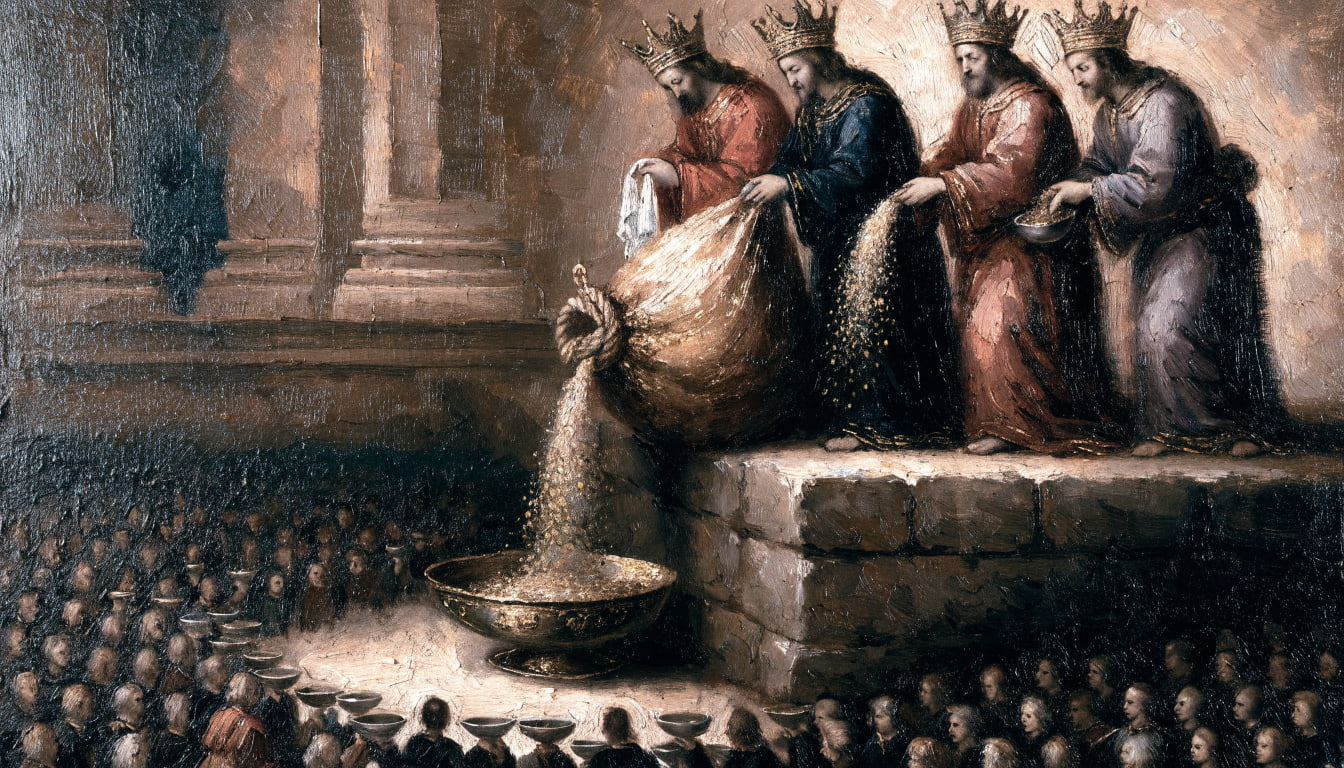
The growth looks like a success story. The concentration behind it is the part that needs explaining. Four wallets received 92% of new supply, and one of them controls the vault behind $1.65 billion in swaps.
Four wallets, one vault

Robinhood sent new stock-token supply to 25 wallets. Four received 92% of the value, and one of the four also controls the vault behind a trading venue called propAMM. That venue traded $1.65 billion, 12% of all Robinhood Chain stock-token volume. Bitquery's trade tables missed it, so Bitquery decoded its swaps manually.
How weekend trading depends on a few quoters

The underlying shares can only be minted and redeemed through channels that close on weekends, according to TokenPost's reporting. A market that trades when the underlying cannot be created or destroyed needs someone holding inventory and quoting continuously. An independent market maker that cannot hedge through the primary channel has little reason to take that risk.
The propAMM vault fills that role. The SPY token sat on one side of 96% of all swaps, making it the de facto base currency. Round trips, where a bot buys and sells the same token in one transaction, accounted for 10% of Robinhood's stock-token volume from October 2 to 31, against 2% for Coinbase's tokens. Robinhood also sponsored gas on qualifying swaps since launch, an offer it said runs to September 29. In our reading, the chain subsidizes the flow, the vault supplies quotes, and four wallets hold the supply. The data is consistent with that structure, though no source tests the counterfactual directly.
What the data confirms, and what it does not
The off-hours share depends on the method. Bitquery puts it at 64%. TokenPost found 67.1% of volume in the 60 largest pools traded while the NYSE was closed in the third quarter, with weekends alone at 18.2%. Allium measured 74% of $4.33 billion in swap volume over the seven days to September 9. The figures differ in method and agree in direction.
Ownership is far more concentrated than trading volume suggests. Outside DEX pools, the median address held $0.67, and the top 1% held 95% of the value. DEX pools held about half of all value. In all 37 weekend and holiday episodes with gaps of at least 1%, token prices moved in the gap's direction during the 30 minutes before the NYSE opened, reaching a median 86% of the gap's size. The median gap to underlying shares fell from 29 basis points in July to 13 in September.
On fees, Alea Research reports Robinhood Chain earned 80% of all layer-2 network fees in Q3 2026, $51.0 million against a median of $24,700 for its peers. DEXs on the chain traded $90.7 billion in the quarter, more than the $50 billion of crypto Robinhood's app and Bitstamp handled.
Why the vault should keep its position until U.S. weekend trading opens
Here is the forecast. The concentration subsidizes the liquidity that makes off-hours trading work, and it persists until a regulated alternative absorbs that demand. Robinhood plans to offer weekend stock trading inside its U.S. app in early 2027, subject to regulatory approval, according to TokenPost. Once that exists, retail demand that now leaks onto the chain has a regulated home, and volume and users are likely to move back into the app.
What remains is a smaller, explicitly non-U.S. venue. Independent market makers have little reason to enter while the underlying cannot be minted on weekends, so the four supply wallets and the propAMM operator are likely to remain the main liquidity providers. Price discovery on the tokenized market would then stay with whoever holds the vault.
The gains and losses are uneven. Robinhood keeps a fee share and gains a regulated product. After Arbitrum takes 10% as license and launch partners take 50% of operator receipts, Robinhood keeps $22.9 million of Q3 fees at the first tier. The propAMM operator keeps a structurally advantaged position. The 584,166 holders, whose median position is $0.67, have no voice in a price set by four wallets. U.S. regulators trying to supervise the market face one that has already moved offshore.
The call can be tested. If Robinhood's U.S. weekend product launches by mid-2027 and the chain's off-hours share falls below 30% within two quarters, this read holds. If independent market makers take significant quoting share without the subsidy, it does not.
The bridge runs on four wallets
The $13.9 billion figure records a market that let U.S. investors trade stocks on weekends by routing them through a chain outside U.S. jurisdiction. Its volume depended on a small set of wallets and one vault. When Robinhood's own weekend trading opens, much of that traffic should cross back, and the bridge will carry a smaller load, probably still managed by the parties who built it.
Bitquery's Robinhood Chain study remains the most complete public dataset on this market, with coverage through November 17, 2026.