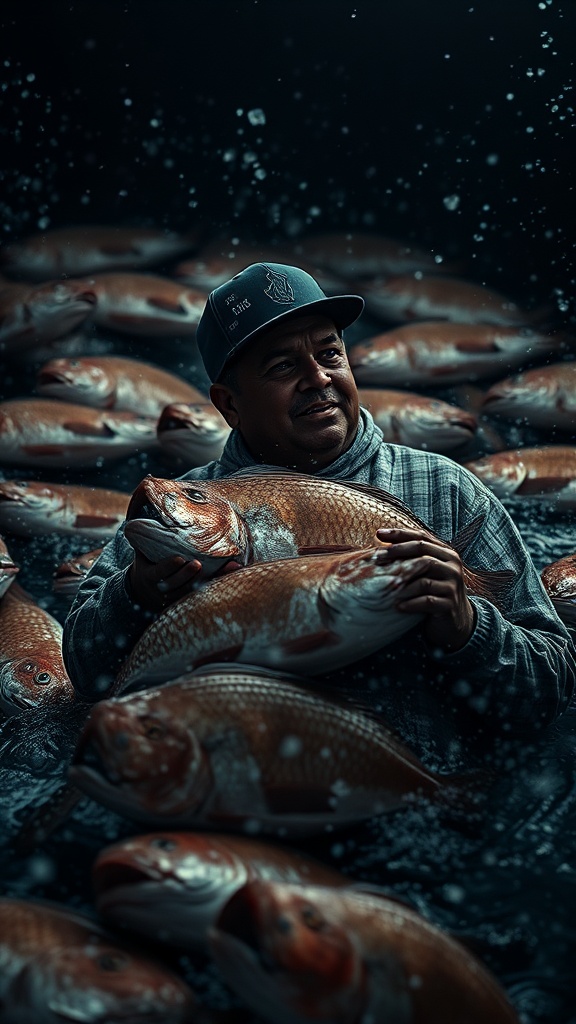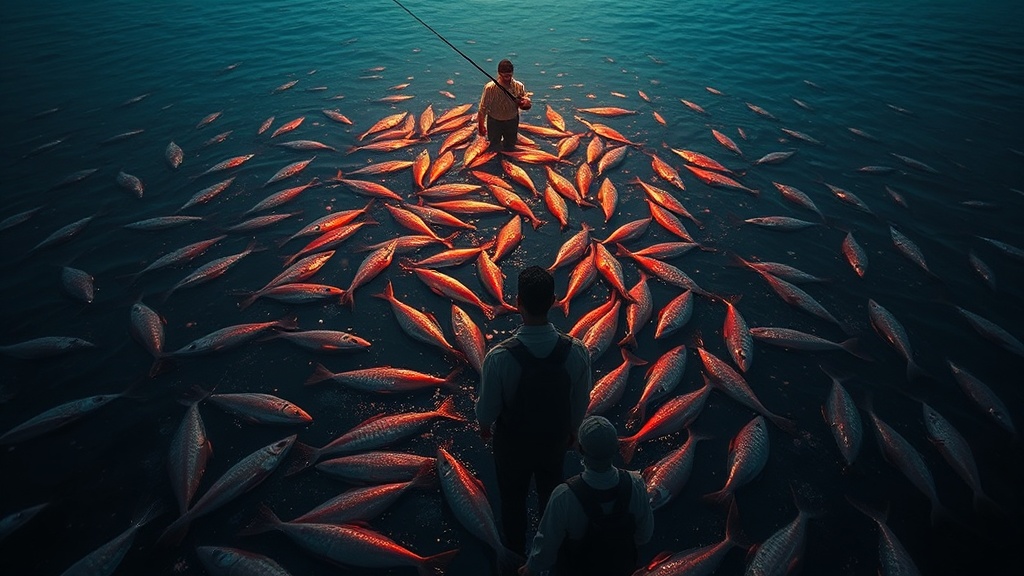

A demonstration project holding 20,000 red drum just cleared the final EPA regulatory hurdle that had stalled it since 2017, cracking open the door to commercial offshore aquaculture in federal waters and forcing importers and Gulf fishing communities to reckon with a $20 billion trade deficit.
A single submersible net pen 40 miles off Sarasota just broke an 8-year regulatory logjam for offshore fish farming in the Gulf of Mexico.

On May 15, 2025, the EPA modified the National Pollutant Discharge Elimination System (NPDES) permit for Ocean Era’s Velella Epsilon project, according to the agency’s permit database. The modification was the final federal permit the company needed to deploy a single SUBflex submersible net pen in federal waters. The project, first announced in 2017 as a grant from Florida Sea Grant to Kampachi Farms (now Ocean Era), will be the first-ever demonstration fish grow-out in federal waters in the Gulf of Mexico.
This tiny batch of red drum is a stress test for the entire US offshore aquaculture industry.
55,000 pounds, 12-mile buffer, hurricane-proof
Here is what the permit actually allows. Ocean Era can produce up to 55,000 pounds of red drum annually, holding about 20,000 fish in water depths of roughly 130 feet, E&E News reported. The net pen, a SUBflex system on a single-point mooring, is submersible and designed to survive a hurricane passing directly overhead. The permit prohibits any waste discharge within 12 nautical miles of the Florida coast.
The project is a partnership with the University of Miami and is supported by the National Sea Grant Program. Deployment is projected for early 2027. The pen will also serve as a Fish Aggregating Device (FAD) for recreational and charter-boat fishermen, a deliberate attempt to build a constituency among the very communities most skeptical of offshore fish farming.
That constituency-building is not incidental. It is the strategy.
“One of the primary goals of this demonstration project is to show the Florida fishing and boating communities that offshore aquaculture will be something that they will love,” Ocean Era founder and CEO Neil Anthony Sims told Aquaculture Magazine. “We now, finally, have our chance to do that.”
The 8-year slog was not a bug
The timeline tells the real story. Ocean Era announced the Velella Epsilon project in November 2017. The EPA did not issue the modified NPDES permit until May 2025. Deployment is not expected until early 2027. That is nearly a decade to get a single net pen with 20,000 fish into the water.
Opposition came from predictable quarters. Marion Cufone of the nonprofit Recirculating Farms raised concerns about offshore aquaculture’s environmental risks. Environmental groups have spent years arguing that net pens concentrate waste, risk disease transfer to wild stocks, and create conflicts with commercial and recreational fishing.
But the consensus view that environmental activism will kill offshore aquaculture in the Gulf misses the real bottleneck. The 8-year delay was not primarily driven by litigation. It was driven by the absence of a clear federal leasing and permitting pathway. No agency owns the process end to end. The Army Corps of Engineers, EPA, NOAA Fisheries, the Coast Guard, and state agencies all hold pieces, and no statute says how they fit together.
That vacuum, not protest, is what kept the Gulf empty.
A $20 billion deficit that will not be ignored
The economic incentive is the force that will not stay buried. The United States runs a seafood trade deficit of over $20 billion per year. Sims put the dependency in blunt terms to WUSF: “Somewhere between 85 and 90% of the fish that we eat comes from other countries. And we have no control over how it is grown.”
He told Aquaculture Magazine the same thing with different framing: “The USA has a seafood trade deficit of over USD 20 billion per year. We believe that Americans should be growing our own fish, instead of putting all of our eggs in other country’s baskets.”
A $20 billion annual deficit is a durable political and economic fact. It does not go away because a local environmental group objects. It sits on the balance sheet of every seafood importer and every member of Congress whose district includes a working waterfront. That number is the reason offshore aquaculture will happen in the Gulf. The only question is when.
The regulatory dam is about to crack
Here is what I think happens next, and why.
Within 12 to 24 months of deployment in early 2027, the Velella Epsilon pen will prove the technical viability of submersible net pens in hurricane-prone federal waters. The SUBflex design is not theoretical. It has been deployed elsewhere. What has been missing is a US regulatory template, and this project creates one.
Once that template exists, at least three competing aquaculture firms will submit permit applications for commercial-scale operations in the Gulf. The companies that have been watching from the sidelines, waiting for someone else to absorb the regulatory risk, will move. The permit conditions set by Velella Epsilon—no discharge within 12 nautical miles, hurricane-proof design, submersible mooring—are now a known quantity. That reduces legal exposure for the next applicant. A firm can now walk into the EPA and say, “We will do what Ocean Era did, at scale.” The agency cannot claim it has no precedent to evaluate.
NOAA will be forced to draft a formal regulatory framework for offshore fish farming in the Gulf of Mexico. The agency has talked about doing this for years. It has published concept papers. It has held listening sessions. But it has not written the rule, because there was no operational project to regulate. A working demonstration pen changes that calculus. Regulators regulate things that exist. Once a pen is in the water, producing fish, with discharge data flowing in, the political pressure to create a clear leasing framework will shift from the aquaculture industry alone to include seafood importers, coastal lawmakers, and the White House. No administration wants to explain why a $20 billion trade deficit persists while a proven domestic solution sits in regulatory limbo.
I expect the first commercial-scale operation to be permitted by 2029.
The second-order effects will ripple through two groups that have been watching this project with very different emotions.
Gulf fishing communities will face new competition for access to federal waters, but also new economic opportunities. A commercial aquaculture operation needs boat crews, maintenance divers, feed logistics, and processing capacity. The same infrastructure that serves wild-catch fisheries can serve farmed fish. The FAD strategy Ocean Era is testing now is a small-scale version of the co-use model that will determine whether fishing communities become partners or adversaries. If the FAD function demonstrably increases recreational catch rates around the pen, a powerful political constituency flips from opposition to demand.
Domestic seafood importers will need to reallocate sourcing strategies. If a reliable domestic supply of red drum, cobia, or almaco jack comes online at commercial scale, importers who do not contract for it will lose margin to those who do. The importers who wait for the regulatory framework to be finalized before engaging will find themselves behind competitors who started building relationships during the demonstration phase. The first commercial harvest will not be sold on a spot market. It will be pre-sold to the importers who showed up early.
The contrarian view is this: the 8-year slog was not a failure of the system. It was a necessary calibration. The permit conditions that emerged—the 12-mile no-discharge zone, the submersible design requirement, the academic partnership—set a high bar. That bar will protect the industry from future environmental lawsuits. A rushed permit with weaker conditions would have been vulnerable to legal challenge for years. The permit that Ocean Era now holds is defensible precisely because it took so long to negotiate. The delay was the cost of durability.
What would falsify this timeline? A major hurricane destroying the pen in its first season, a disease outbreak that transfers to wild stocks, or a shift in political control that halts NOAA’s rulemaking. Any of those would reset the clock. But the underlying economic pressure—$20 billion a year leaving the country for foreign seafood—does not reset. It accumulates.
Move now, or pay later
The window is narrow, and it is open now.
Seafood importers should begin planning for domestic supply chains that do not yet exist but will. The companies that treat the Velella Epsilon demonstration as a signal rather than a curiosity will have a contracting advantage when commercial volumes arrive.
Gulf fishing communities should engage with Ocean Era directly. Understand how the FAD function works in practice and what co-use of federal waters looks like when a net pen is present. The demonstration phase is the time to negotiate norms, not after commercial operations lock in their operational patterns.
Aquaculture firms that have been waiting on the sidelines should begin preparing permit applications now, using the Velella Epsilon permit as a template. The EPA has now shown what it will approve. The Army Corps has now seen a complete application. The first-mover advantage in permitting is real, and it belongs to whoever files next.
One pen, one crack
That single submersible net pen 40 miles off Sarasota holds only 20,000 fish. At 55,000 pounds of annual production, it will not make a dent in a $20 billion trade deficit. That is not its job.
Its job is to prove that the thing can be done. To show that the engineering survives a hurricane. To demonstrate that the discharge rules are workable. To give NOAA a live project to regulate. To give importers a domestic supplier to contract with. To give fishing communities a FAD to fish around.
Once those things are true, the dam breaks. The question is no longer whether offshore aquaculture will happen in the Gulf. It is who will be ready when it does.