
Pakistan's nuclear umbrella just expanded. It now covers Riyadh and Ankara.
On August 7, Saudi Crown Prince Mohammed bin Salman, Turkish President Recep Tayyip Erdogan, and Pakistani Prime Minister Shehbaz Sharif signed the Mecca Joint Defence Agreement. The core clause is a tripwire: “any armed attack against any one of the three States shall be regarded as an attack against them all.”

The presence of Pakistan's army chief, Field Marshal Asim Munir, at the summit removed any ambiguity about who holds the real pen in Islamabad. The pact ended a year of negotiations that accelerated after the February 2026 US-Israeli strikes on Iran, reaching a draft by January 2026. The stated logic is defensive. A Turkish official told Reuters the pact is “purely defensive,” and the text specifies it is open to other regional countries and does not replace existing arrangements, including Turkey’s NATO membership.
But the stated intent is a decoy. The strategic weight of the signatories is the only thing that matters.
This is a promise, not a plan
Calling this a “Muslim NATO” is a misread. NATO has a unified command, an integrated budget, and an Article 5 invoked exactly once. This pact has none of that. PRESS Insider confirmed the agreement specifies no troop commitments, no joint command, no financing mechanisms, and no rules for intervention. It is a political-military declaration of intent to negotiate a response, not to fight one.
The real power is Pakistan’s nuclear arsenal. The text is silent on nuclear sharing. That silence is not a gap. It is the signal.
Pakistan is a declared nuclear power with a growing MIRV capability. Turkey fields NATO’s second-largest army and a defense-industrial base that now exports armed drones and warships. Saudi Arabia commands the world’s largest oil reserves and a geographic position straddling the Strait of Hormuz and the Red Sea. The pact does not need a joint command because its deterrence logic is asymmetric. A conventional attack on Riyadh or Ankara now carries the implicit risk of a nuclear response from Islamabad. The tripwire is set. No one knows what voltage will trigger it, and that ambiguity is the point.
The tripwire and the coming realignment
Three chains of consequence are now in motion, unfolding on different clocks.
Israel will request explicit US nuclear assurances within 12 months. Israel’s undeclared arsenal has always been the region’s ultimate backstop. But a conflict with Turkey—a NATO member—or Saudi Arabia now carries a Pakistani nuclear dimension that Jerusalem cannot deter alone. The US nuclear umbrella over Israel, long implicit, will need to become explicit and perhaps codified. The legal friction of a NATO ally inside a non-NATO nuclear alliance will force Washington to choose between managing Ankara and reassuring Jerusalem. It cannot do both quietly.
India will accelerate its ballistic missile defense program within 24 months. The Indo-Pak nuclear balance is now linked to the Gulf. Indian defense planners can no longer model a Pakistan contingency in isolation. A crisis in the Arabian Peninsula could cascade into a South Asian nuclear confrontation, and India’s existing BMD architecture was not designed for that geometry. Expect Delhi to fast-track the next phase of its Phase-II shield and seek deeper co-development with Israel and the US on exo-atmospheric intercept.
The pact’s first real test will be a cyberattack, not a border clash. The most likely scenario: a sophisticated attack on Saudi Aramco traced to a state actor, likely within six months. If the response is coordinated—Pakistan offering cyber defense, Turkey contributing signals intelligence, Saudi Arabia footing the bill—the alliance is real. If the response is a Saudi statement and silence from Islamabad and Ankara, the pact is a glorified memo. A coordinated response would prove the bloc can operate below the threshold of conventional war, exactly where modern conflict lives. Silence would prove it cannot.
The Iran squeeze and the NATO contradiction
The second-order effects cascade from there. Iran is now flanked by a nuclear-backed bloc. Its calculus on proxy warfare in Yemen, Iraq, and Syria must now price in the risk that a Houthi missile strike on Riyadh could escalate into something Tehran cannot control. The asymmetric advantage Iran has enjoyed for two decades just narrowed.
For the United States, the friction is structural. Turkey remains a NATO member with access to alliance planning, integrated air defense, and nuclear sharing arrangements under the B61 program. It has now signed a collective defense pact with a nuclear power outside the alliance and a Gulf monarchy the US is treaty-bound to defend. The legal contradictions are not theoretical. If an attack triggers both NATO’s Article 5 and the Mecca pact’s collective defense clause, Washington and Islamabad could find themselves on opposite sides of the same crisis—or bound to defend parties that are bound to each other in ways the US did not authorize.
What this means for operators
For defense analysts, the threat matrix for South Asia and the Middle East just merged. Any model that treats the Indo-Pakistani nuclear dyad and the Gulf security architecture as separate problems is obsolete. The next regional war will not start with a tank column. It will start with a hybrid attack—cyber, drone, proxy—calibrated to test whether the bloc is real.
For investors, the capital flows are already legible. Saudi defense spending will accelerate beyond its Vision 2030 targets. Turkish defense stocks, particularly drone and naval platform manufacturers, are a structural buy. Pakistani nuclear infrastructure will quietly attract Saudi funding, likely channeled through joint ventures and sovereign wealth allocations that avoid explicit proliferation triggers. The global energy trade is already repricing Hormuz risk. This pact adds a nuclear dimension to that calculus.
For policymakers, the clock is ticking on the formal US-Israel nuclear assurance request. Prepare the diplomatic architecture now or face a crisis-driven negotiation later. For military planners, the old rules of engagement in the Gulf and the Arabian Sea just expired. The next engagement will not look like the last one.
The ink is dry. The test is coming.
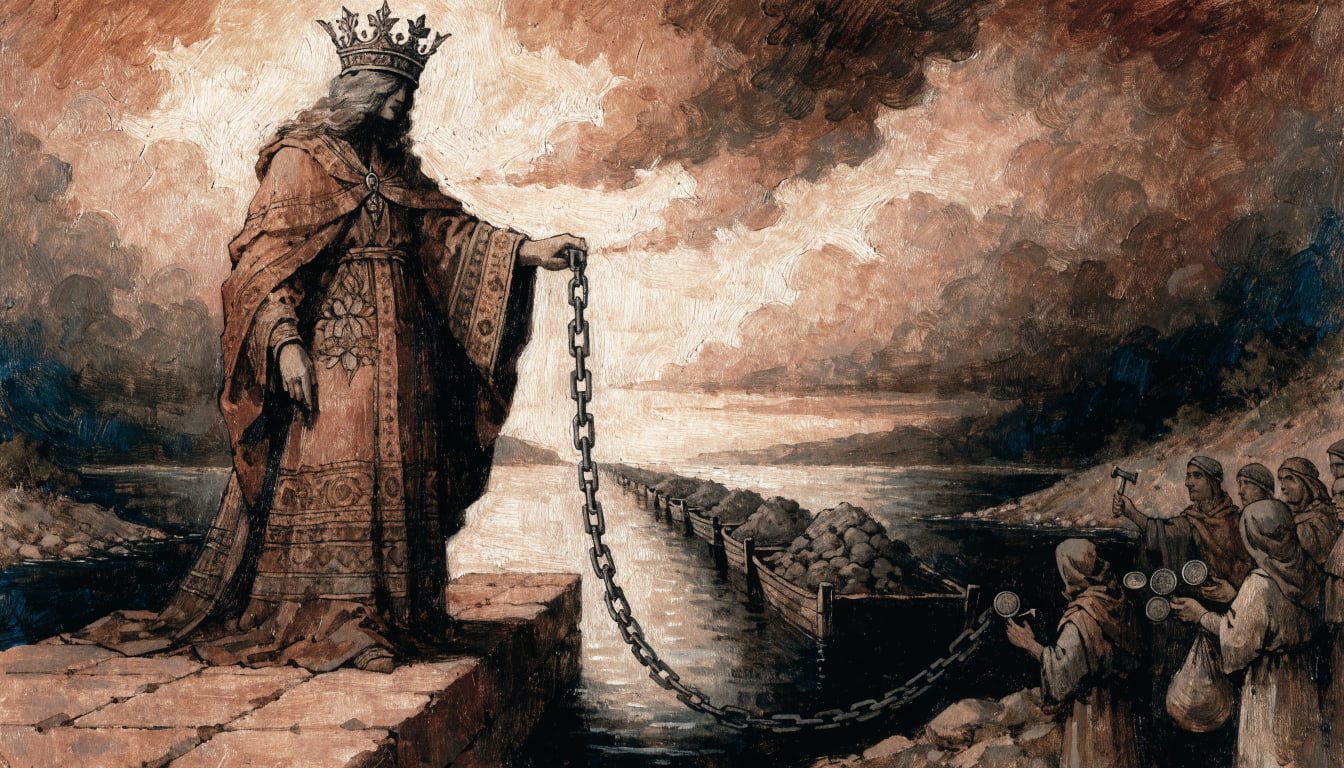
Pakistan’s nuclear arsenal now has three guarantors bound by treaty. The question is no longer whether the bloc will be tested. It is when. And when it is, the world will find out if the chain holds or shatters.
The first real test is already being planned in a server room somewhere. The silence on nuclear sharing is the signal. The response to the first attack will tell us everything.