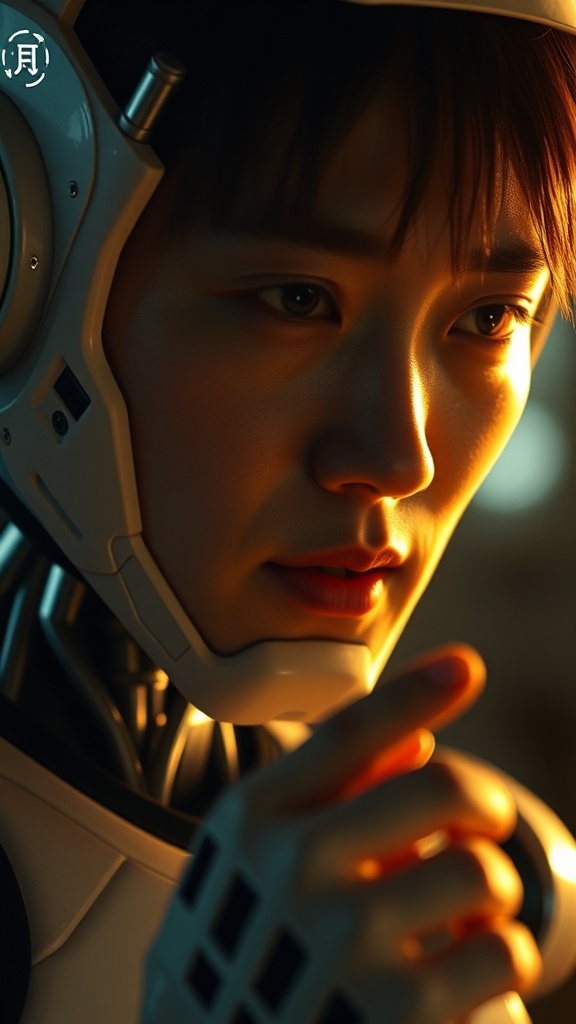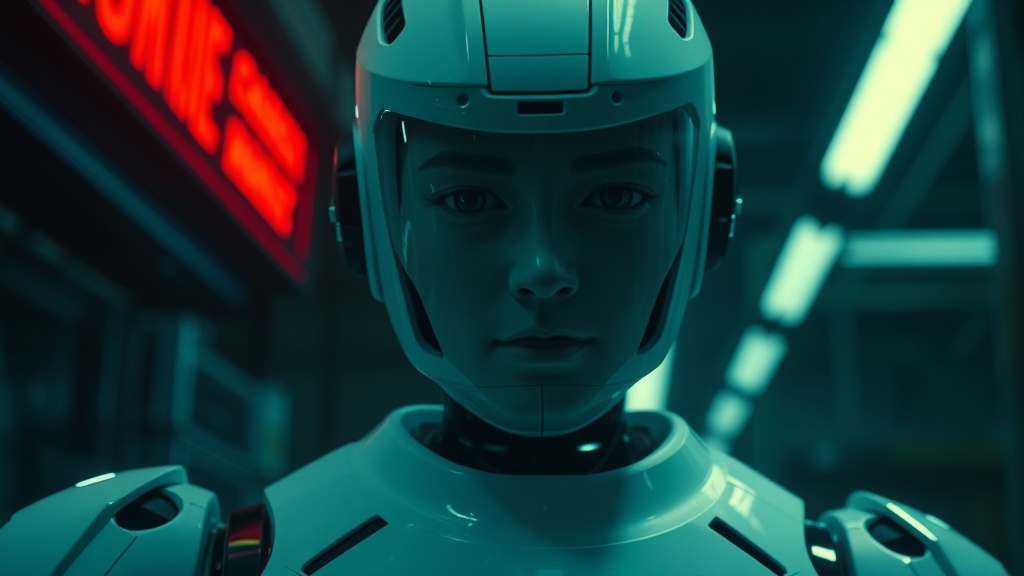

Japan’s working-age population will drop by 13 million by 2040.
The government is betting a trillion yen on robots to replace them.

The math is brutal. In 2020, Japan had roughly 75 million people between 15 and 64. By 2040, that number collapses to 62 million. The government looked at immigration reform and birth-rate incentives and decided neither would move fast enough. Its answer is a publicly funded, sovereign AI model designed specifically to control physical robots—and a plan to deploy 10 million of them across 18 industries by 2040.
This is not a technology story. It is a demographic survival plan with a hard deadline.
The $6.1 Billion Wager
Japan’s Ministry of Economy, Trade and Industry (METI) and its innovation agency NEDO formally commissioned Noetra and the National Institute of Advanced Industrial Science and Technology (AIST) to build a “physical AI” foundation model, according to Physical AI News. The public funding commitment: up to one trillion yen, roughly US$6.1 billion, over five years.
The current fiscal year’s commission alone is worth approximately US$2.3 billion, drawn from a 387.3 billion yen allocation funded through GX Economy Transition Bonds. Only the first two years of funding are locked in. After that, the money gets reviewed annually through a stage-gate process.
An initial version of the model is due in fiscal year 2026, with annual upgrades planned after that. This is happening now.
Industry minister Ryosei Akazawa stated the revised strategy, announced July 1, 2026, will “vigorously promote social implementation across a total of 18 fields.” The latest revision added restaurants, food manufacturing, and medical sectors to a deployment list that already included manufacturing, logistics, and ground handling.
The Demographic Wrecking Ball
The government’s own AI Basic Plan, adopted by Cabinet decision on December 23, 2025, is remarkably frank. It states that Japan aims to become “the most AI-friendly country in the world.” It then admits the country is nowhere close. AI is “not yet actively used in daily life and work,” and Japan’s investments and development “lag behind major economies and some smaller ones.”
The document reads less like a strategy and more like a confession. The working-age population is falling off a cliff. Every sector feels the pinch. The AI Basic Plan’s subtext: Japan cannot afford to wait for someone else’s technology.
That admission is what makes the Noetra project different from every other national AI initiative. This is not a research grant. It is a catch-up play with a demographic fuse burning underneath it.
How the Brain Works
The technical goal is a multimodal foundation model that reads language, images, video, and sensor data together. A robot equipped with this model does not execute pre-programmed motions. It interprets a room—the clutter on a factory floor, the position of a baggage cart, the movement of a patient—and acts.
Noetra is majority-owned by SoftBank, NEC, Sony Group, and Honda. Fujitsu and Rakuten are reportedly considering joining, and the total number of investing companies is expected to reach 44, spanning automotive, electronics, manufacturing, finance, and logistics. SoftBank engineers are working alongside researchers from Preferred Networks and AIST on the core model.
The training pipeline is already taking shape. On February 1, 2026, SCSK, Net One Systems, and TechShare began a collaboration to generate synthetic training data using NVIDIA Isaac Sim and NVIDIA Cosmos. Their stated target: automating non-routine tasks in manufacturing, logistics, and medical fields.
Meanwhile, the first real-world tests are underway. In May 2026, Japan Airlines, JAL Ground Service, and GMO AI & Robotics began a demonstration experiment for humanoid robots at airports—the first of its kind in Japan. The robots are being tested on baggage loading, cabin cleaning, and operating ground support equipment. These are not lab demos. They are operational trials in a live environment where labor is already scarce.
Tokyo’s 2028 Trigger
Japan’s 10-million-robot gambit will trigger a global race for sovereign physical AI models. The starting gun has already fired.
By 2028, Japan will have deployed 500,000 AI-powered robots across its 18 target industries. That number is not a government projection—it is the midpoint on the trajectory from a 2026 model to 10 million deployed units by 2040. The airport trials are running now. The industrial consortium behind Noetra is not a policy paper; it is SoftBank, Sony, Honda, and NEC with a budget and a deadline. If the model ships in 2026 and the integration curves follow typical industrial robotics adoption rates—constrained by physical production capacity, not software—500,000 is where the math lands. The falsifiable piece: if Japan fails to hit 500,000 deployed robots by 2028, it means either the model didn’t generalize beyond controlled environments or the manufacturing supply chain couldn’t produce the hardware. Either way, the sovereign AI thesis cracks.
A sovereign physical AI model is not a better chatbot. It is a national infrastructure asset that controls the machines doing the physical work. Once Japan demonstrates that such a model can operate at scale, the strategic calculation for every country with a shrinking workforce changes overnight.
The U.S. and EU will launch competing programs within 18 months of seeing Japan’s early results. They will have no choice. A physical AI model trained on Japanese factories, Japanese logistics networks, and Japanese healthcare workflows will not transfer cleanly to American or European environments. The data, the sensor configurations, the safety regulations, the physical layouts—all of it is sovereign. The U.S. does not let foreign code run its power grid. It will not let a foreign AI model run its factories.
China will accelerate its own robot workforce targets. Beijing already views robotics as a strategic industry. Japan’s explicit framing of physical AI as demographic survival will validate that thesis and sharpen the urgency. The race will not be about who builds the smartest robot. It will be about who owns the model that controls the largest fleet.
SoftBank and Sony will emerge as the dominant platform owners. They control the model architecture and the hardware integration path. Everyone else—the component suppliers, the factory integrators, the logistics operators—will build on top of their stack. Fujitsu will join Noetra before the end of 2027. The pressure to be inside the consortium rather than outside it will be too great.
Then comes the consequence that matters most.
The definition of industrial sovereignty shifts from chip fabrication to physical AI model ownership. A country that cannot build or license a sovereign physical AI will not control its own manufacturing base. It will be dependent on a foreign model to run its factories, move its goods, and staff its hospitals. That dependency is more profound than any semiconductor supply chain risk.
Nations with shrinking workforces—South Korea, Italy, Germany—will face a binary choice: license Japan’s model or build their own. Licensing means accepting Tokyo’s architecture, Tokyo’s data standards, and Tokyo’s update cadence. Building their own means starting from scratch while the demographic clock ticks.
What This Means for You
For policymakers, logistics executives, and tech investors, the signal is clear. The window to build a competing physical AI platform or negotiate a partnership with Japan’s consortium is closing.
Noetra is not a startup pitching a vision. It is a government-backed entity with SoftBank’s capital, Sony’s hardware expertise, Honda’s robotics lineage, and a funded mandate to ship a model in 2026. The companies that integrate early will shape the standards. The countries that wait will consume them.
The cost of inaction is not abstract. By 2040, Japan will have replaced 13 million missing workers with a robot fleet that does not age, does not retire, and does not require a visa. Any nation that fails to match that capability will cede manufacturing and logistics leadership to Tokyo—not because Japan out-innovated them, but because Japan faced the demographic math first and acted.
The New Workforce
Japan looked at a population curve that drops by 13 million working-age people in two decades and made the only bet that could scale in time. The result is a sovereign AI model designed to run physical machines, a consortium of the country’s largest technology firms, and a 10-million-robot deployment target with a 2040 deadline.
The question is not whether Japan will succeed.
The question is whether the rest of the world will recognize what just happened and move before the window closes.
The new workforce does not age. Tokyo just funded its brain.