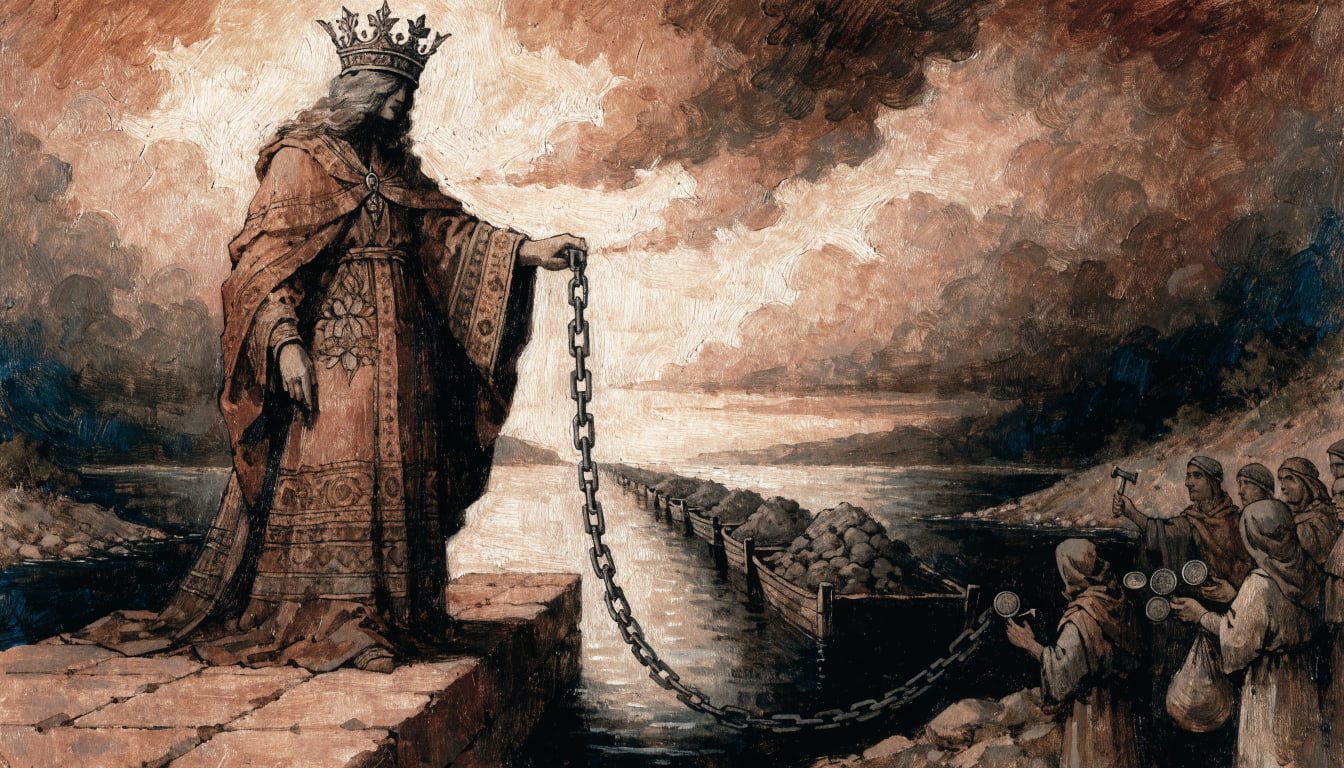
95 percent of tanker traffic through the Strait of Hormuz has vanished since March 4.
The world is not just running out of oil. It is running out of food. The consensus framing of this as an energy crisis misses the point. Oil prices can spike and recede with strategic reserve releases and demand destruction. But a missed fertilizer application window has no workaround. A wheat field that doesn't get nitrogen in March doesn't produce grain in July, regardless of what happens to crude prices afterward. The market is obsessing over the 30% oil price jump while the real story unfolds in the dirt.
The Slow-Motion Detonation

The Strait of Hormuz closure is a multi-stage economic weapon. Its primary chokepoint is not crude oil but fertilizer. The shock unfolds in a specific sequence: energy, fertilizer, seeds, lower yields, commodity price increases, then food inflation, according to the FAO. Within 18 months, a cascading fertilizer shortage will trigger export restrictions in at least three major grain-producing nations. This will cause a hunger-driven political crisis in North Africa that eclipses the 2011 Arab Spring. The petrodollar will survive the oil disruption, but a new geopolitical currency is emerging: long-term fertilizer supply contracts. Food sovereignty will permanently eclipse energy security in national defense planning.
The trigger event was the March 4, 2026, closure. On that date, Iran declared the strait shut following US-Israeli airstrikes that killed Supreme Leader Ali Khamenei. Before the closure, 20 million barrels of oil per day passed through the strait, representing 25% of global seaborne oil trade, according to UNCTAD. The waterway also carried 38% of global LPG, 29% of crude oil, 19% of LNG, 19% of refined oil, and up to 30% of internationally traded fertilizers. Within days, war-risk insurance premiums jumped from 0.25% to as high as 10% of a vessel's value, with coverage resetting every seven days.

The Mechanism: Fertilizer, Not Fuel
The immediate, visible shock was oil. WTI crude surged to $92.42 on June 2, up roughly 30% from pre-war levels. Brent crude hovered at $91 to $92 per barrel as of May 31 after spiking past $100 earlier in the month. The Federal Reserve Bank of Dallas modeled the inflation impact: closing the strait for one quarter pushes Q4 2026 headline PCE inflation up 0.35 percentage points. Two quarters adds 0.79 points. Three quarters adds 1.47 points, with core inflation rising 0.49 points and one-year expectations jumping half a percent.
That is the lagging indicator. The leading one is in the dirt.
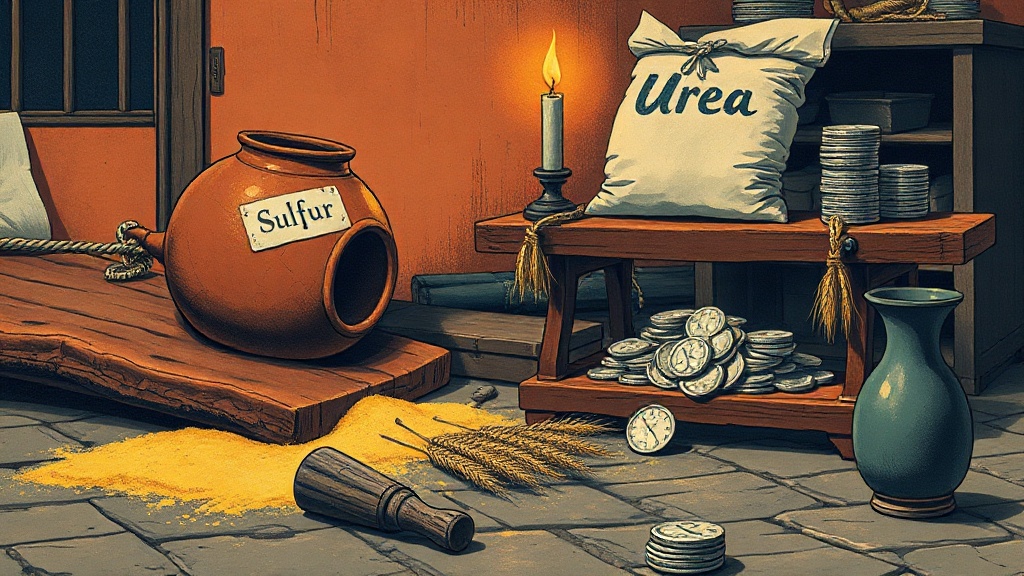
Fertilizer prices spiked immediately. Middle East granular urea jumped 19% in the first week of March. Egyptian urea surged 28%. The shock compounds through a second, less visible chokepoint: sulfur. The Gulf region accounts for nearly half of global sulfur trade, a critical input for producing sulfuric acid to process phosphate rock into fertilizer. A disruption here starves phosphate production globally, even for countries that do not source their finished fertilizer from the Gulf.
Farmers facing unaffordable inputs now means lower yields in six to twelve months. The FAO Food Price Index rose for a third consecutive month in April 2026, driven by high energy costs and Middle East disruptions. Cereal producers could face income losses of up to 5% in 2026, with lasting impacts through 2030. "This is not only an energy shock. It is a systematic shock affecting agrifood systems globally," said FAO Chief Economist Máximo Torero. "The longer the strait is closed, the more inventories are run down, the more likely it is that we reach 'tipping points' in the markets for some commodities," wrote HSBC lead analyst Paul Bloxham.
The tipping point is not a price spike. It is a biological deadline. A missed planting window for a major exporter like Russia, Brazil, or India has no workaround. The grain is not produced. The calorie deficit arrives 18 months later, and no central bank can print food.
The 'Fertilizer-for-Food' Bargaining Chip
The petrodollar system, born from the 1971 Nixon Shock and solidified by Henry Kissinger's 1974 deal with Saudi Arabia to price oil exclusively in dollars, will survive this disruption. Asian buyers still need energy, and alternative settlement mechanisms in yuan remain marginal. The real geopolitical transformation is elsewhere.
A new currency is emerging: long-term fertilizer supply contracts. Nations that can guarantee ammonia, urea, and phosphate shipments will dictate terms to nations that cannot. Food sovereignty will permanently eclipse energy security in national defense planning because the threat vector has changed. A country can weather an oil price spike with strategic reserves and demand destruction. It cannot weather a calorie deficit once its own harvest fails and the global market has no surplus to sell.
The prediction: within 18 months, the cascading fertilizer shortage will force export restrictions from at least three major grain-producing nations. The most vulnerable importers are in North Africa, a region that imports a large share of its calories and where bread prices have already toppled governments. The resulting political crisis will make 2011 look like a tremor. The Dallas Fed's 1.47-point PCE projection is a macroeconomic abstraction. The concrete outcome is hunger on a scale that reshuffles regimes.
What to Do With This Information
For investors, the long agriculture and fertilizer trade has structural legs far beyond the oil spike. The biological clock means supply constraints compound even if the strait reopens tomorrow, because the planting decisions for 2027 are being made now with 2026's price signals and input shortages.
For policymakers, the only solution is a diplomatic off-ramp. Alternative land routes via the eastern Arabian Peninsula, western Saudi Arabia, and the Red Sea have limited capacity, FAO Director David Laborde confirmed. They cannot replace the 20 million barrels per day of oil flow, let alone the fertilizer volumes. Every week the strait stays closed, the eventual food crisis deepens on a delay that makes it politically invisible until it is too late to act.
For the public, expect persistent food inflation through 2030. This is not a transitory blip. The income losses for cereal producers in 2026 will compound into reduced planting, reduced yields, and elevated prices for years.
The empty tankers in the Gulf are not just an energy story. They are a premonition of empty grain silos and bread lines. The Strait of Hormuz has become the world's most dangerous agricultural chokepoint, and the clock ran out the moment the planting season began.