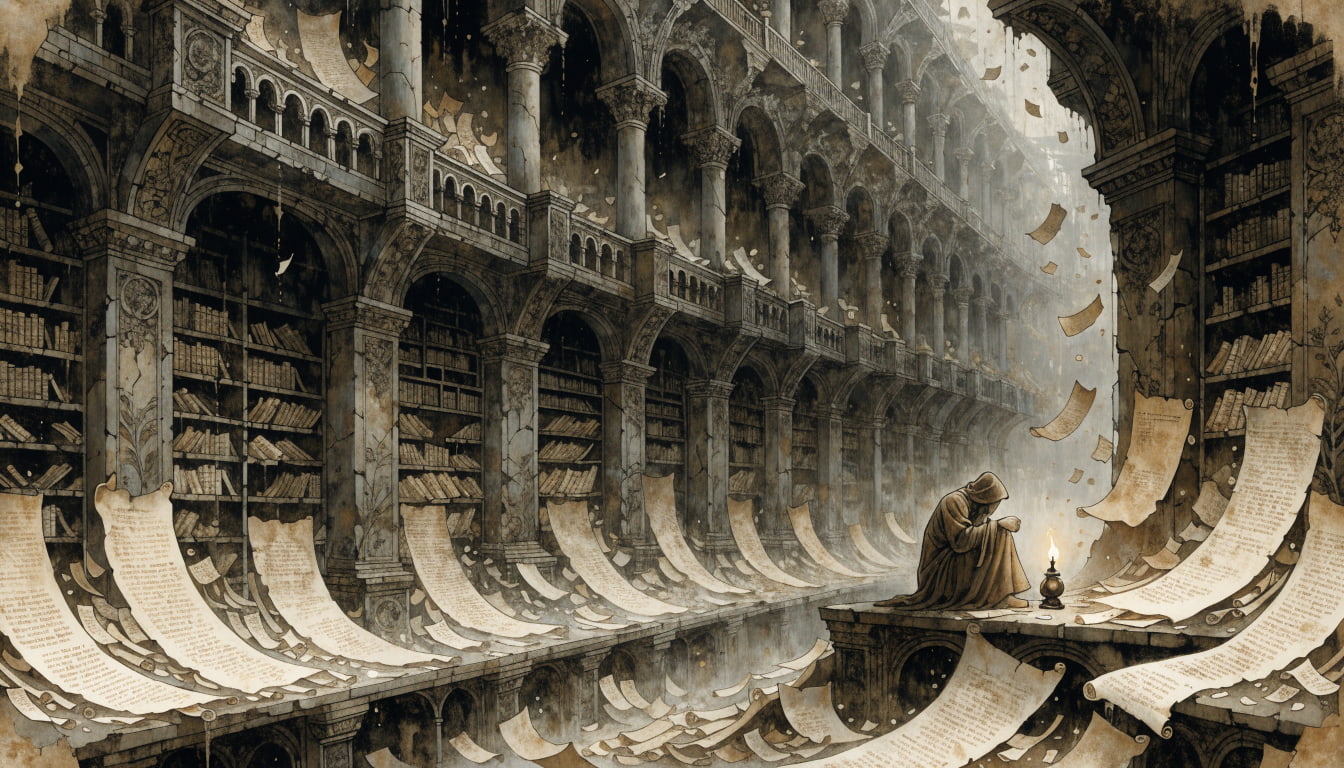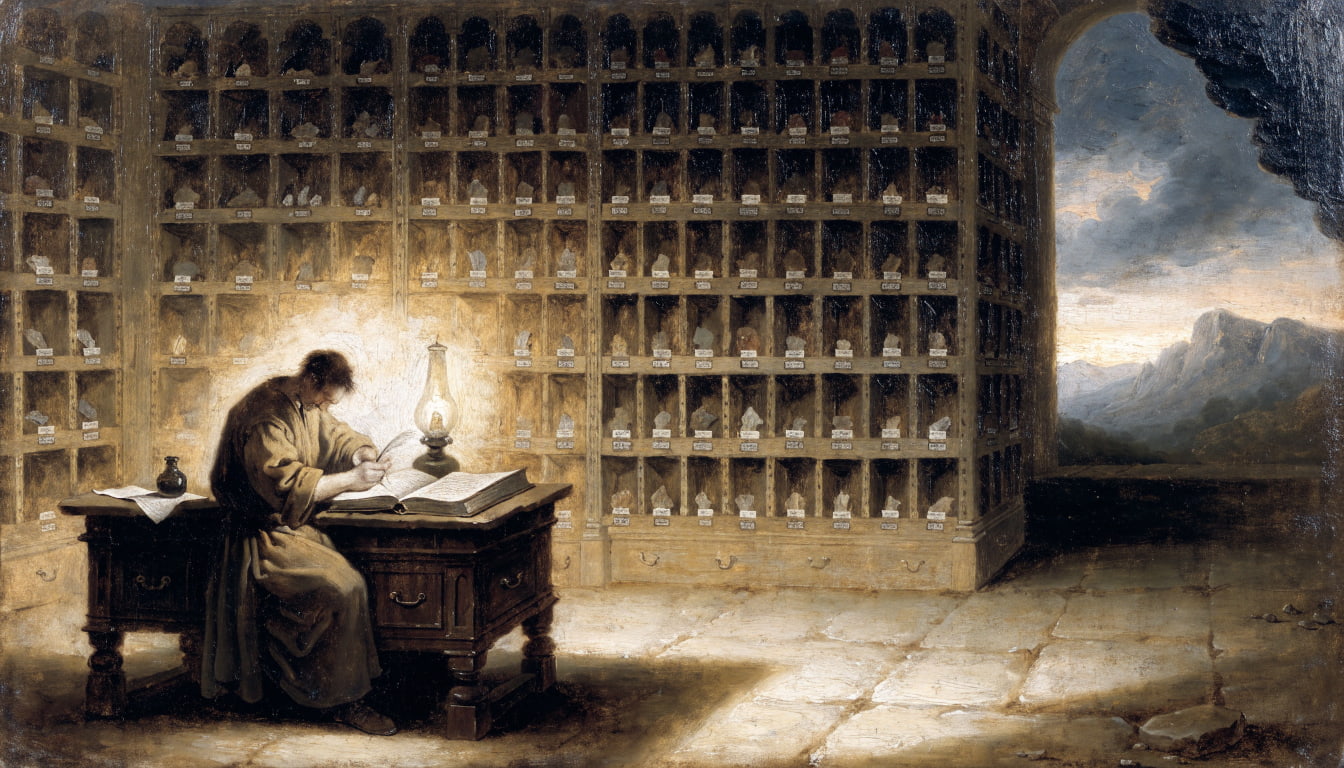
 The automaton’s silent guidance overrules the masters, symbolizing how agentic AI orchestrates chip design.
Microsoft unveiled the Majorana 2 topological quantum chip at its Build 2026 developer conference in San Francisco on June 2. The processor achieves a 1,000-fold improvement in qubit reliability over its predecessor, with a mean qubit lifetime of 20 seconds and individual qubits sustaining their quantum state for over a minute. The company attributes the leap to a new materials stack—replacing aluminum with lead as the superconductor and upgrading the semiconductor to indium arsenide and indium arsenide antimonide—and to an agentic AI platform that synthesized cross-disciplinary research to compress a decade of experimentation into 18 months. Microsoft now targets a scalable quantum computer by 2029, halving its original timeline.
Context: The Ghost of Majorana 1
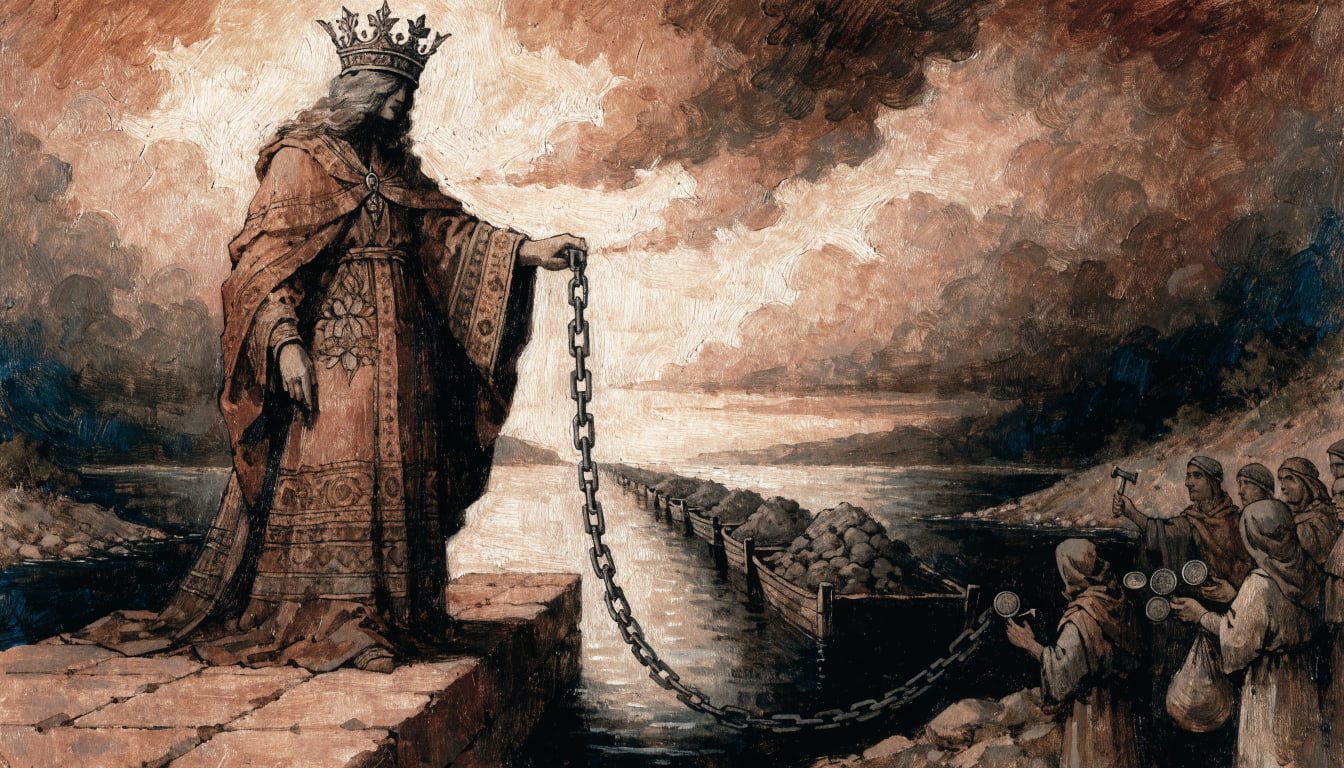
 The lighthouse represents Microsoft’s quantum focus, ignoring prior failures to push toward a 2029 milestone.
When Microsoft announced Majorana 1 in 2025, the physics community met the claim with open skepticism. Topological qubits had been a theoretical promise for years. The company’s assertion of a hardware breakthrough landed as a press release in search of a peer-reviewed reality. Majorana 1’s qubit lifetime of 1 to 12 milliseconds was a proof-of-concept, not a platform. Competitors on superconducting transmon paths could dismiss it as lab theater. Majorana 2 erases that dismissal.
The Mechanism: Lead, Arsenic, and AI Agents
Three components drove the jump from millisecond instability to minute-scale coherence.
The materials stack. The Majorana 1 chip paired an aluminum superconductor with an indium arsenide semiconductor. Majorana 2 swaps aluminum for lead and adopts a dual-semiconductor active region of indium arsenide and indium arsenide antimonide. The result, according to Chetan Nayak, Microsoft technical fellow and corporate vice president of quantum hardware, is a topological gap more than double that of the previous processor. That gap is the chip’s shield. A wider gap means the Majorana Zero Modes that encode quantum information are less vulnerable to environmental noise. The hardware proof is in a published technical paper titled “20 Second Parity Lifetime in an InAs-Pb Tetron Device.” The gate-defined tetrons—topological qubits built from two superconducting nanowires with Majorana Zero Modes at each end—now sustain parity for 20 seconds on average, with outliers crossing the one-minute mark. Qubit operations happen on the microsecond scale, so a 20-second lifetime opens the door to millions of error-corrected operations per qubit.
The agentic AI multiplier. The materials breakthrough did not come from a lone physicist’s insight. Microsoft’s quantum team spans physics, mechanical engineering, and process engineering. The company deployed its Microsoft Discovery platform, an agentic AI system now generally available for frontier R&D, to ingest and synthesize knowledge across those disciplines. Zulfi Alam, corporate vice president for quantum at Microsoft, described the mechanism to Computer Weekly: “The AI is able to synthesise knowledge from all these different disciplines.” The agents did not run simulations in a vacuum. They cross-referenced materials science literature, fabrication constraints, and quantum theory to propose the lead and indium arsenide antimonide combination that doubled the topological gap. A process that Microsoft estimates would have taken a decade of traditional iteration finished in 18 months.
The architectural continuity. Majorana 2 is not a clean-sheet design. It refines Majorana 1’s tetron architecture with a new stack. That continuity matters. The team validated the topological approach with the first chip, then weaponized AI to find the materials that make it reliable. The 1,000x improvement is a materials story, not a conceptual pivot.
The Reckoning Is Now
Here is what is confirmed: Majorana 2 holds a qubit state 1,000 times longer than Majorana 1. The topological gap doubled. The mean lifetime is 20 seconds. The target is a scalable quantum computer by 2029.
Here is what that means. Twenty seconds of parity lifetime resets the competitive landscape. Superconducting transmon qubits, the architecture Google and IBM have bet their public roadmaps on, operate on coherence times measured in hundreds of microseconds. Error correction on transmons is a treadmill. Every incremental fidelity gain requires more physical qubits, more dilution refrigerators, more cost. Majorana 2’s lifetime makes topological qubits the first hardware platform where error correction is a tractable engineering problem rather than a physics research question.
I predict the following. Within 12 months, Google and IBM will publicly announce hybrid or “exotic matter” programs that supplement their transmon roadmaps. Neither company can afford to let a 20-second parity lifetime stand as the new table stakes without signaling a response. The announcements will cite the Majorana 2 results, obliquely or directly, as the impetus. Within 24 months, a major peer-reviewed replication attempt of the topological gap will fail to fully reproduce Microsoft’s claimed parameters. That failure will surface the AI-driven black-box risk: the team used agentic AI to find a materials recipe that works, but whether the fundamental physics understanding of why lead and indium arsenide antimonide produce this exact gap has kept pace with the fabrication capability is an open and dangerous question. If the gap degrades at scale, the team may lack the first-principles model to diagnose the failure quickly. The consequence will be a funding crisis for at least one DARPA quantum program that placed a parallel bet on an alternative architecture, as agency reviewers recalibrate risk around unverified topological claims.
The contrarian angle is not that Microsoft cheated. The contrarian angle is that the company may have leapfrogged the physics. Agentic AI found the recipe. The recipe works. But a recipe is not a theory. Scaling from a tetron to a million-qubit processor requires a theory. That gap between empirical success and conceptual understanding is the most dangerous failure mode in the 2029 timeline.
The Operator’s 2029
A scalable quantum computer in 2029 shifts national security and commercial timelines in ways that planning documents have not yet priced in. Cryptography standards currently migrating to post-quantum algorithms assume a longer threat horizon. A functioning topological machine accelerates the date at which Shor’s algorithm becomes a practical decryption tool. Materials design pipelines that today rely on classical approximation will gain a tool that simulates molecular interactions without exponential overhead. The AI models that will run on these machines are the same models Microsoft is already building Azure infrastructure to serve. The loop closes: AI designed the chip, the chip will run AI workloads that design the next chip. The operator who controls that loop controls the pace of discovery.
Loop Closed
The quantum race stopped being about better error correction on flawed qubits. It is now about building with the right elements from the ground up. Lead replaced aluminum. The foundation is poured. The question for every competitor is whether their roadmap can survive a materials science coup they did not see coming.