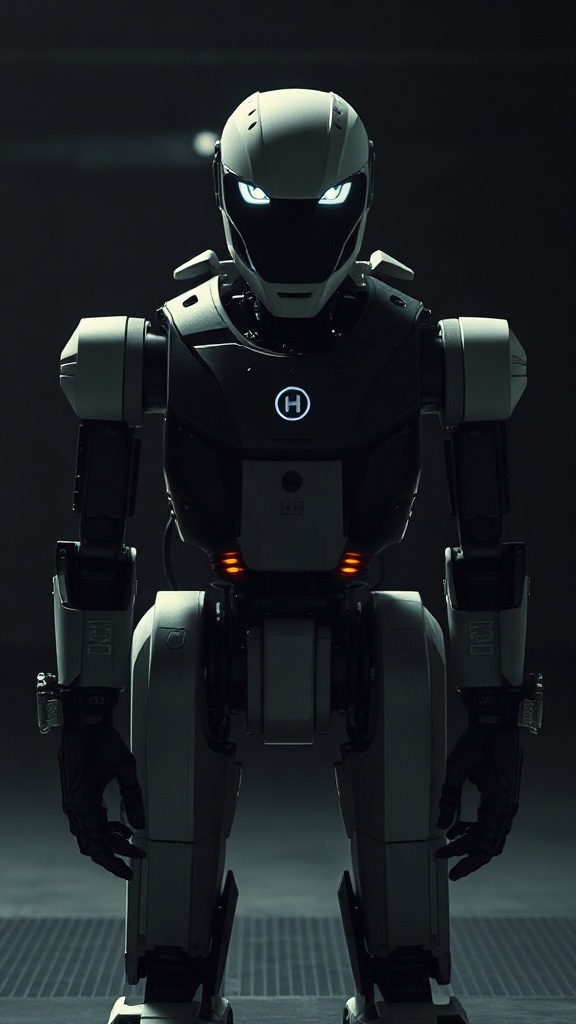
A Seoul startup with 40 employees just pulled off a backflip. The timing is a deliberate shot at a market that lost its dominant supplier the day before.

On July 29, 2026, Robros published a video of its IGRIS-C humanoid executing a windmill spin, a backflip, a sequence of kicks, and a deep squat. It was a raw display of dynamic balance that few bipedal robots on the planet can match.
The previous day, July 28, the FCC added all foreign-produced humanoid and quadruped robots to its national security Covered List. The ruling bars new Chinese-made models from import, marketing, and sale in the United States.

Chinese manufacturers hold roughly 85 percent of global humanoid market volume, according to TechTimes. The dominant supplier to the world's largest market was just locked out. The next morning, a small Korean firm posted a video proving it could match the technical capability of any Chinese competitor.
This was not a coincidence. It was a market signal.
A Market Without a King
The FCC ban targets a supply chain that was, until that Monday, overwhelmingly Chinese. Unitree, Fourier Intelligence, and a dozen other firms had flooded the global market with humanoid platforms. Their cost structures and production scale made them the default choice for US manufacturers and logistics firms experimenting with bipedal automation.
That option is now gone. Procurement budgets allocated to Chinese vendors are stranded. The question is where they go.
Robros operates on a different scale. The company has raised $10.6 million in total venture funding and employs a team of over 40 people, per TechTimes. Its IGRIS-C platform was commercialized in November 2025 and is already deployed on factory floors in Korea. The robot stands 154 centimeters tall, weighs 56 kilograms, and handles a payload of approximately 6 kilograms.
The numbers are modest. The timing is not.
The Full-Stack Startup in Seongsu
Robros was founded in Seoul in 2020. The company initially targeted service-sector applications for IGRIS-C. Demand from manufacturing and logistics firms forced a hard pivot to industrial use cases, a shift the company details on its own site.
The firm builds its robots in-house at its headquarters in Seongsu, Seoul. It is a full-stack operation: actuators, control software, the hand controller. The IGRIS-C hand runs on ROS 2 and Dynamixel servos, with the code open-sourced on GitHub.
This is not an integrator assembling off-the-shelf parts. It is a company that controls its own hardware and software stack. That distinction matters when industrial customers demand customization for specific workplace conditions. Seungjun Roh, Robros' CEO, told reporters that "the ability to customize robots for specific workplace conditions is a key factor in adoption decisions."
Robros has already supplied IGRIS-C units to Kwangwoon University, Kyung Hee University, and Sogang University, according to the Seoul Economic Daily. The company is running proof-of-concept tests with Lotte Global Logistics and domestic shipyards. These are not lab demos. They are operational trials in environments where failure has a cost.
The Backflip Is a Credential, Not a Product
The backflip video is easy to dismiss as a stunt. That misses the point entirely.
Dynamic full-body movement is the hardest problem in bipedal robotics. A robot that can land a backflip without destroying itself has solved a cascade of control problems: real-time balance adjustment, actuator coordination under extreme load, fall recovery. These are the same capabilities required to walk across an uneven factory floor, step over debris, or catch itself after a slip. The backflip is the proof of concept. The factory floor is the application.
Robros remains committed to bipedal locomotion, a deliberate and commercially sharp choice. Roh explained the reasoning plainly: "Many of the industrial sites we have examined are not organized well enough for wheels to move efficiently. Since most facilities are designed around people who walk on two legs, bipedal locomotion is essential for introducing robotic automation without changing existing infrastructure."
This is the core economic argument for humanoids over wheeled platforms. Factories were built for humans. Retrofitting them for wheels costs money. A bipedal robot that can operate in existing aisles, stairwells, and workspaces eliminates that cost. The backflip demonstrates the robot can handle the physical demands of those environments.
The product that will actually compete for US procurement budgets arrives in August 2026. Robros plans to launch the IGRIS-C+, an upgraded model featuring a newly developed proprietary actuator. Payload capacity jumps from approximately 6 kilograms to between 15 and 20 kilograms using both arms. That puts it in range for meaningful industrial tasks: lifting tooling, moving components, handling packages in a warehouse sortation workflow.
The 12-Month Scramble for a New Supplier
The FCC ruling creates a vacuum that will reshape procurement in three distinct waves.
The immediate effect is a frozen market. US firms that were evaluating or deploying Chinese humanoids must now find alternative suppliers. Imagine an automotive parts supplier in Ohio that had a pilot program with a Unitree H1 for kitting operations. That program is dead. The budget is unspent. The problem it was meant to solve—labor shortages in repetitive, ergonomically damaging tasks—remains. The pressure to find a replacement is not theoretical; it is a line item in a quarterly operations review.
The second wave is a scramble for the only viable alternative: Korea. Japanese humanoid development has been slow and academic. US startups like Figure and Apptronik are advancing, but their production capacity is tiny and their unit costs remain high. Korea has an existing industrial robotics ecosystem anchored by Hyundai and Doosan, a government actively funding robotics development, and a cluster of startups now reaching commercial maturity. Robros is the most visible, but it will not be the last.
The third wave is a land grab for early-adopter relationships. Korean vendors will be capacity-constrained for at least 18 months. The IGRIS-C+ upgrade arriving in August directly targets the industrial use cases that Chinese bots previously served. A 15 to 20 kilogram payload capacity, combined with proven dynamic motion capability, makes the platform a credible replacement for Unitree and Fourier units in light manufacturing and logistics tasks. The backflip video was the market signal that the capability exists now, not in two years.
The prediction is specific and falsifiable. Within 12 to 18 months, Robros will secure at least one major US-based manufacturing or logistics client, likely in automotive or warehousing. That contract will trigger a Series A funding round of $50 million or more from US and Korean strategic investors. The IGRIS-C+ will ship to at least three non-Korean industrial customers by the second quarter of 2027.
Chinese humanoid exports to the United States will collapse. The ruling makes import and sale illegal. Chinese firms without non-Chinese manufacturing bases have no path to the US market. Those that do establish offshore production—in Vietnam or Mexico—will face a 12 to 24 month timeline to build facilities, transfer tooling, and certify new supply chains. By the time they arrive, Korean vendors will have locked in early adopter relationships.
The second-order effect is an acceleration of Korean robotics investment. The FCC ban does not just redirect procurement dollars. It signals to venture capital and corporate strategic investors that Korean humanoid firms have a protected market window. Capital that was hesitant to compete with Chinese scale will now flow toward the firms that can capture the vacuum. Robros, with its full-stack approach and existing industrial deployments, is positioned to absorb a disproportionate share.
The third-order effect is geopolitical. If the US ban proves effective at shifting supply chains, allied nations in Europe and the Indo-Pacific may follow with their own restrictions on Chinese humanoid imports. That would further consolidate Korea's position as the West's primary humanoid supplier. Japan may eventually compete, but its robotics establishment has been slow to commercialize bipedal platforms. The window is open now.
The loser is any Chinese humanoid maker without a non-Chinese manufacturing base. The winner is Robros and any Korean robotics firm that can replicate its full-stack approach: in-house hardware, proprietary actuators, open-source software, and real industrial deployments.
What to Do Right Now
If you are a US manufacturing or logistics procurement manager, start evaluating Korean humanoid vendors. The window for early adoption partnerships is narrow. The companies that establish relationships now will get allocation priority when production scales.
Pay attention to the IGRIS-C+ specifications when they drop in August. The 15 to 20 kilogram payload figure is the threshold number. If Robros delivers that in a production-ready unit, it crosses the line from development platform to industrial tool.
Do not assume Chinese vendors will find a workaround quickly. Offshore manufacturing takes time. Certification takes time. Trust, once broken by a national security ruling, takes longer. The US market for Chinese humanoids is closed for the foreseeable future. Plan accordingly.
The Hard Part Starts Now
The backflip was a credential. It proved that a 40-person team in Seoul can build a robot that moves with the dynamic capability of the best Chinese platforms.
The harder work is what comes next: scaling production, hitting delivery timelines, and proving that IGRIS-C+ can hold up to three shifts in a factory. That is an operations problem, not a robotics problem. It is the kind of problem that $50 million in Series A funding can solve.
A single backflip did not change the market. But it arrived at the exact moment the market was forced to look for an alternative. The door is open. The room is empty. The next 12 months determine who fills it.